
How Can I Make Gear Last Longer?
It’s hard to spend money on gear, and then our kids (or we) get holes so quickly. Sometimes it’s totally a freak accident or regular wear and tear, but sometimes it’s just being stupid. For example, my husband once decided to try to get our Solo Stove burning better by using a leaf blower to the bottom. We now have several camp chairs with burn holes in them. (The blow torch to light the Solo Stove had fewer adverse effects.)
This DIY gear repair post is just for you if you are cheap (like me), environmentally conscious (I guess that’s me also), and/or have kids to play hard outside (definitely me). We will be looking at ways to keep gear functioning for longer or to rehab used gear that you bought without realizing it needed some TLC.
We’ll also cover field repairs and some high value options for when you can’t do the repairs yourself. As a general piece of advice, I try to buy stuff that will last as long as I want it to (2 kids, for example, rather than ½ a season). Spending a little more upfront, even if it is for used gear, can help to keep you from needing so many repairs.
This post may contain affiliate links. As an Amazon Associate and member of other affiliate programs, if you purchase something through one of these links and use the discount codes provided, we may earn an affiliate commission at no cost to you.
All products and brands recommended are hand selected by our team, so thank you for supporting us by clicking through!
Keep Your Gear Clean
Your gear lasts longer when it’s clean. This is true of everything from your climbing rope to your sleeping bag to your rain gear. In fact, inside Big Agnes sleeping bags it says, “Even dirtbags wash their sleeping bags.”
When you wash gear, be sure to look up the manufacturer’s recommendation for how to treat the gear. They will usually recommend that you use specialty gear soap or non-detergent soap. We always use non-detergent laundry soap (the hippie varieties that were ok with cloth diapers), but use downwash for gear. If you do buy specialty soap (like downwash), you may not need the high concentration that it recommends. We use very little because otherwise we need to run several rinse cycles to get the soap out. The amount of soap you actually need is a combination of the hardness of your water, type of washing machine, and how much stuff you have in it.
For puffy gear (sleeping bags, insulated jackets and pants), you need to be sure to use a front loader. The agitator in top loading machines can rip the baffles. When you dry them, dry for a really, really long time on low with tennis balls, dryer balls, or clean sneakers in with them. The hard item will bounce around and fluff the insulation back up.
Be sure you dry for a very, very long time because it takes a while for the down to all get dry. This does make your gear warmer! But you don’t want to wash too often because you’ll also break down the insulation a little. We wash our sleeping bags about once a year and our puffy layers at the end of the winter. Sometimes the kids’ jackets get washed more because they like to lean on dirty cars at the ski area.
For rain gear, I try to get them clean with just water if possible. I just run it through the wash with no soap then hang dry. If you do need soap, look at the manufacturer’s recommendations. Again, non-detergent soaps should work fine.
Other clothing should be washed as necessary, but doesn’t need to be washed daily (unless it’s really gross). It’s better to use non-detergent soaps for gear and some gear shouldn’t go in the dryer. I’ll readily admit that I just dry nearly everything (except rain gear). I don’t use high heat, but I don’t have the patience or easy space to hang dry stuff. The one big exception is that I don’t put stained clothing in the dryer until I’m sure the stains are out.
For getting rid of stains, mostly you can use stain remover. The only time I don’t use regular stain remover (Shout for me) is if I have an oily stain (blue Dawn dish soap) or blood stain (peroxide).
Climbing ropes can be washed by hand in a bathtub. I used dish soap on mine last time I washed it, per manufacturer’s recommendation. Tents and sleeping mats can be sprayed off outside. Be sure to dry them after each trip so that they don’t get mildewy or moldy. Pillows either are like sleeping mats or they have a cover that can be taken off and washed (and hung to dry).
For more great cleaning tips, check out our post on How to Clean Your Outdoor Gear!
DIY Shoe Repair
I get so frustrated when shoes fall apart faster than my kids outgrow them. Ideally, I’d like shoes to hold up through both kids; it’s even better when I can then hand them down to a friend.
For gluing soles back on, Shoe Goo works pretty well. Clean, apply, and let dry.
If a kid rips the fabric on a shoe, use repair tape; my favorite is Tenacious Tape Repair Tape in clear. This summer my son broke his foot. Once it was mostly better, he had to wear a carbon fiber insole for a few weeks. He swore up and down that he didn’t need my husband to shave it down to fit in his BRAND-NEW trail runners.
His feet are BIG, so these are adult shoes! In the third week of wearing the insole, he sliced a giant hole in the side of the uppers of the shoes. Ugh. I repaired the giant hole in the side of the shoe (see below) with two pieces of repair tape (one on the inside, one on the outside), and it held up for another two weeks of summer camp.

If the inside of a shoe is starting to come apart, PTFE (Teflon) stickers can cover up the ripped parts in the liner. Even duct tape (or stronger stuff such as Gorilla Tape) can go on the inside of liners. That’s what the local ski shop did when I was having issues with my ski boots. In that case, they also were able to adjust the ski boot fit so that my feet stayed put inside better, making the repair last longer.
Shoelaces are replaceable, but it’s often worth the money to try to find nicer ones that will last a little longer.
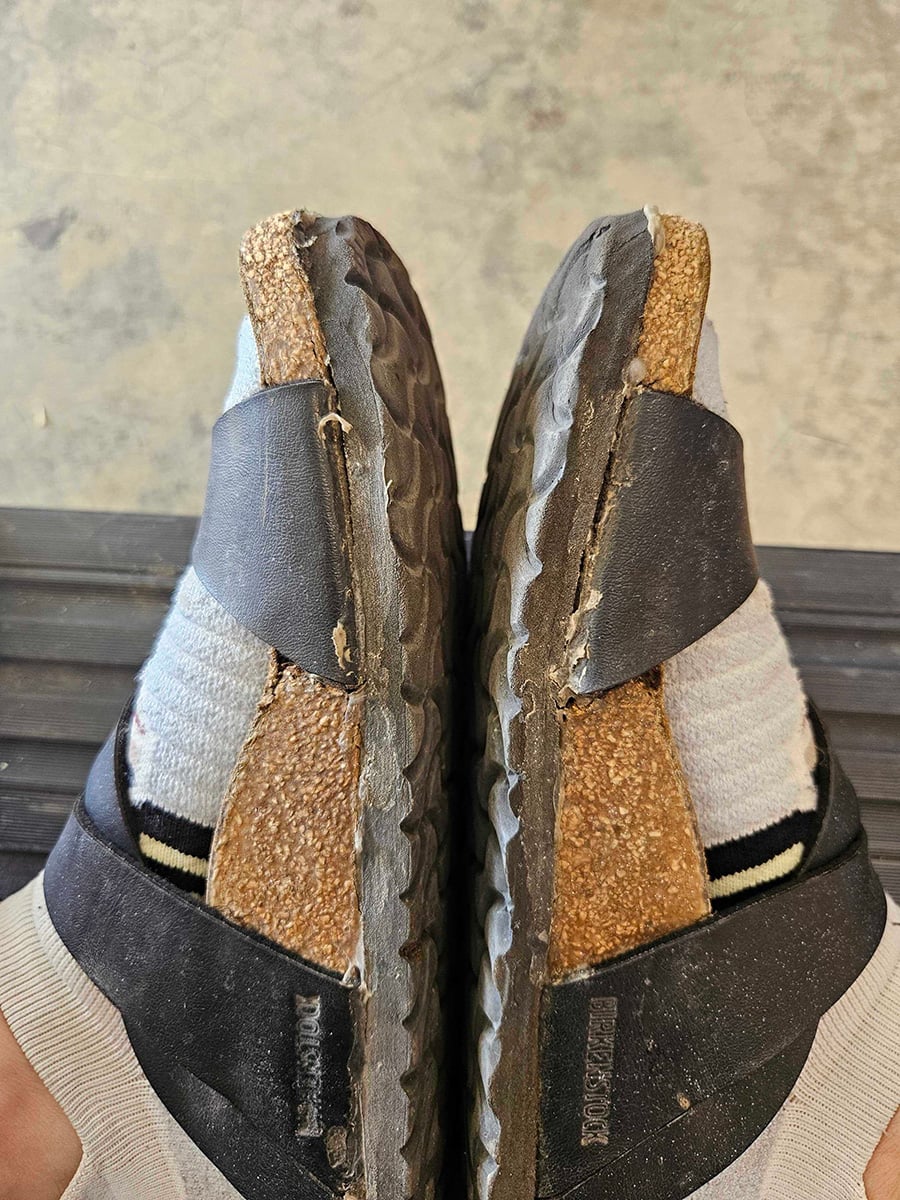
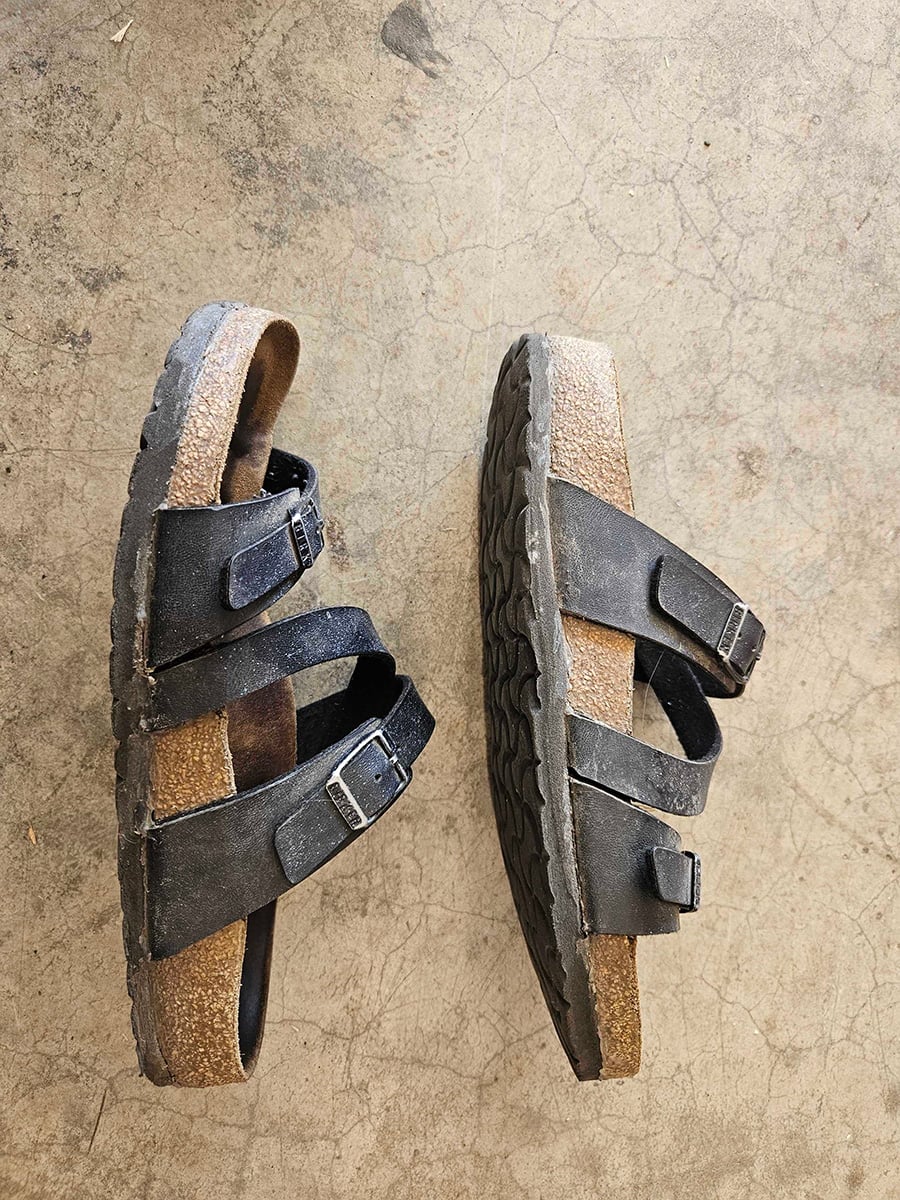
TMM Member Anna resoles her own Birkenstocks! Here’s what she says, “I resoled my Birks for the second time. This might have to be the last time though because the cork is getting rough. I buy the sole material off Etsy. Use a hair drier to heat the old glue and pull off the old sole (this takes time and patience I usually watch a show while I do it) then cut the sole from the Etsy sheet to size and use shoe glue to stick it on. Clamp for a few days then wear. They are not pretty but they’re on my feet far away from people’s eyes and they work great.”
DIY Outdoor Clothing Repair
Small holes, rips, tears, and falling ember holes in nylon clothes can be repaired with the Tenacious Tape Repair Tape. I like clear so that it goes on everything. It’s also a little stretchy.
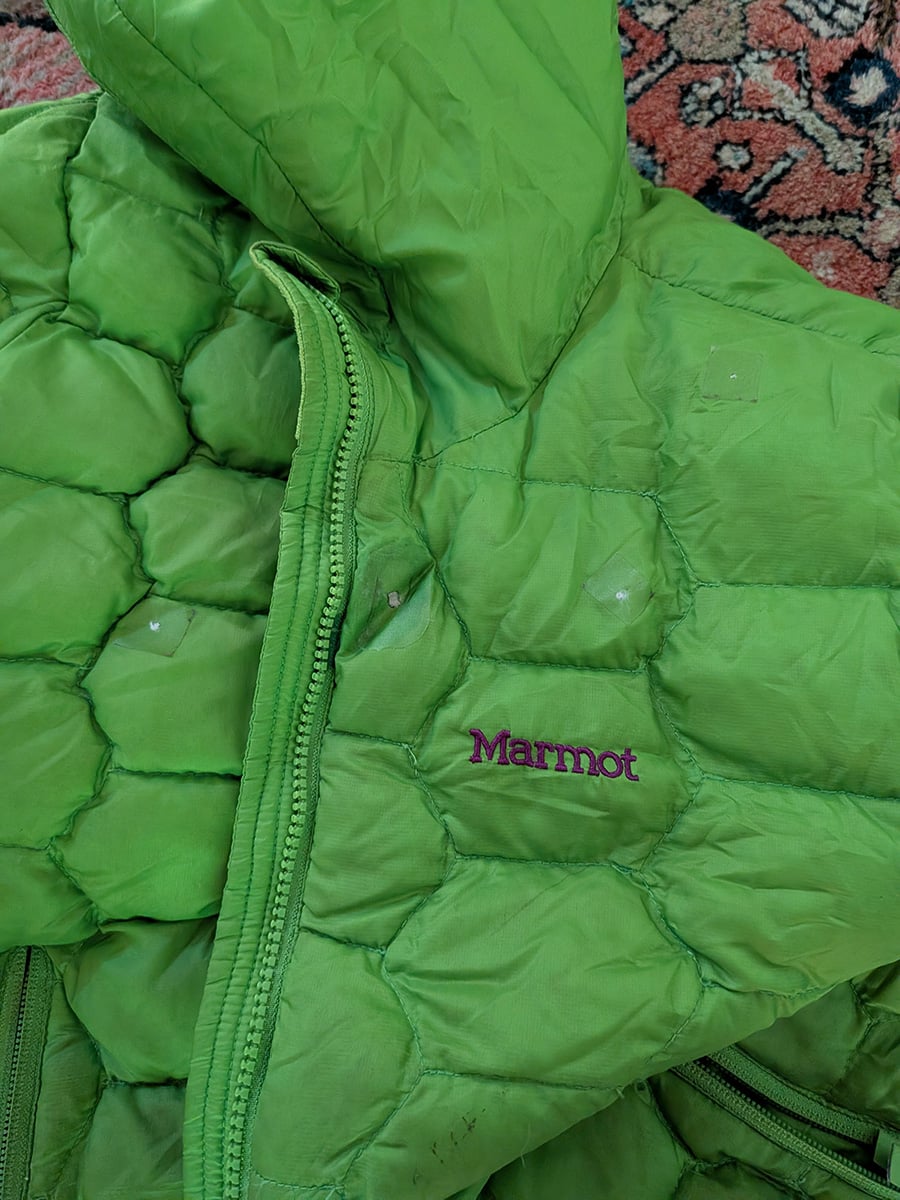
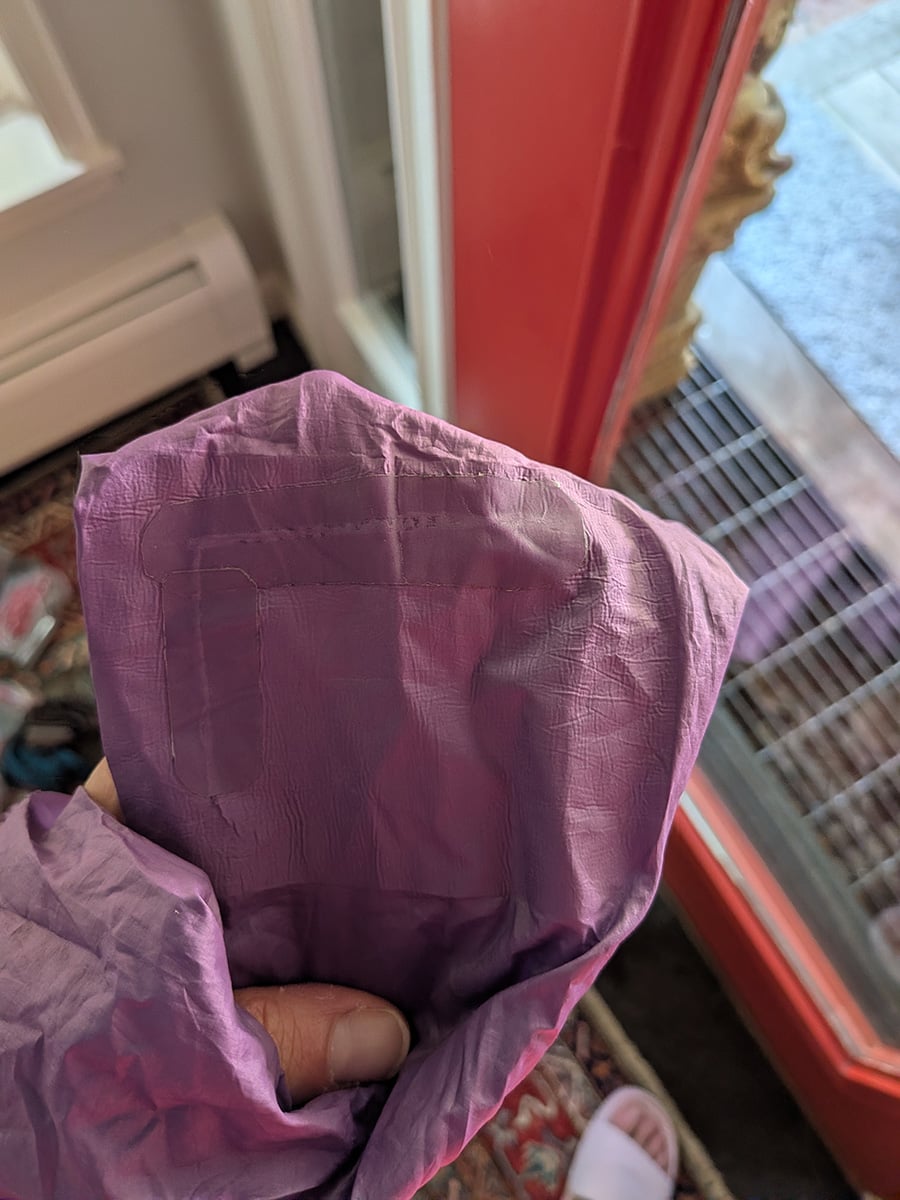
When the rips in outerwear are really big, sometimes I sew up the hole first with thread, then put the repair tape on top. If you are worried it won’t stay down well enough, you can get seam grip to use as a glue. Seam grip is basically a silicon glue that is a little thinner than the shoe goo. You want the less liquidy stuff.
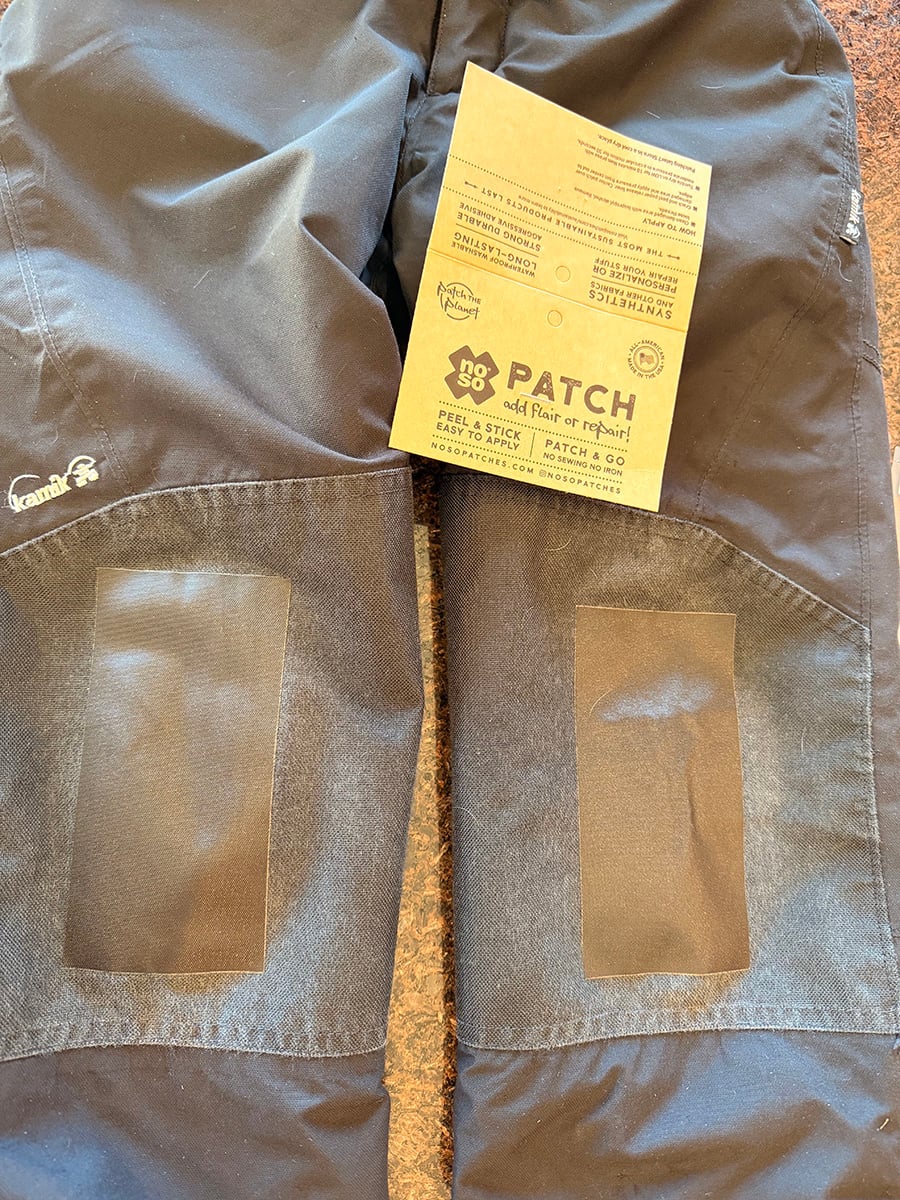
You can also buy fun patches from NoSo and Gear Aid.
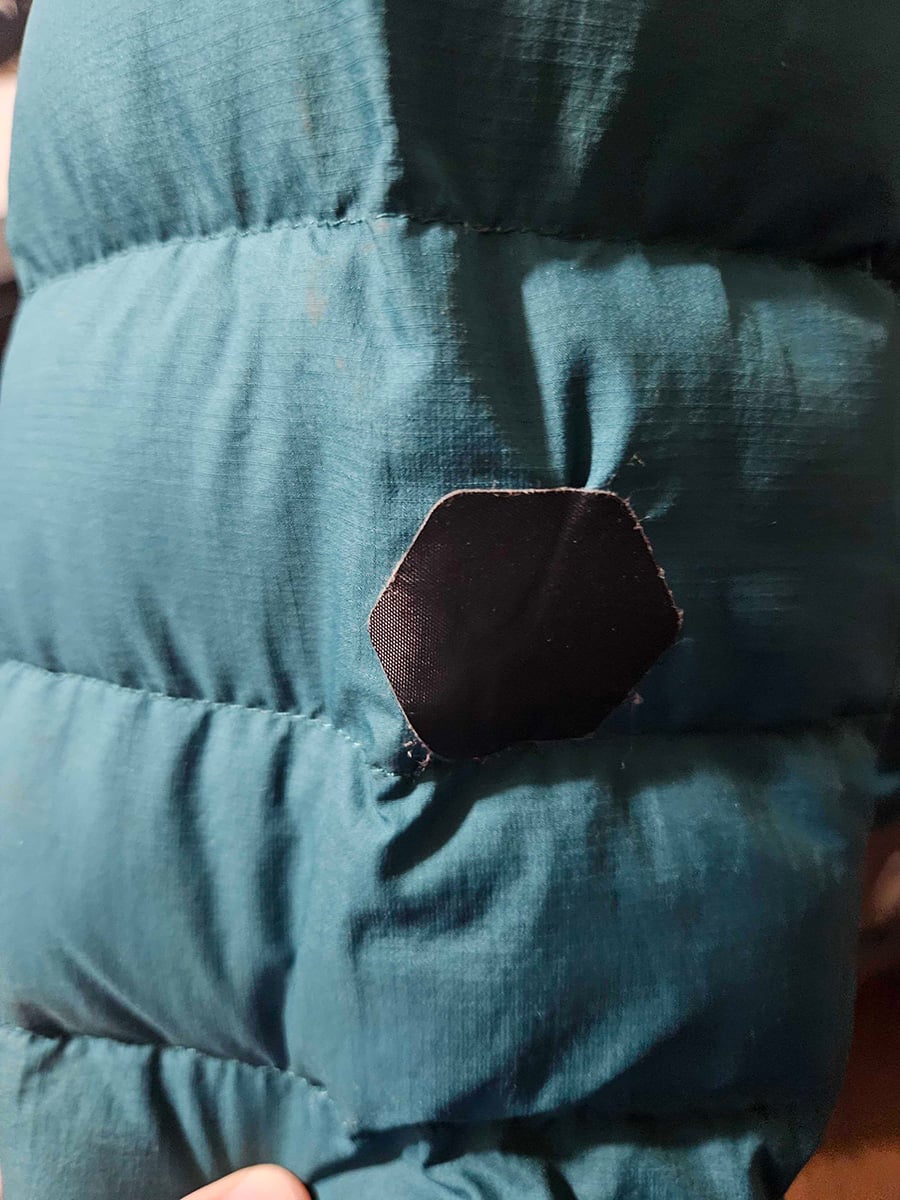
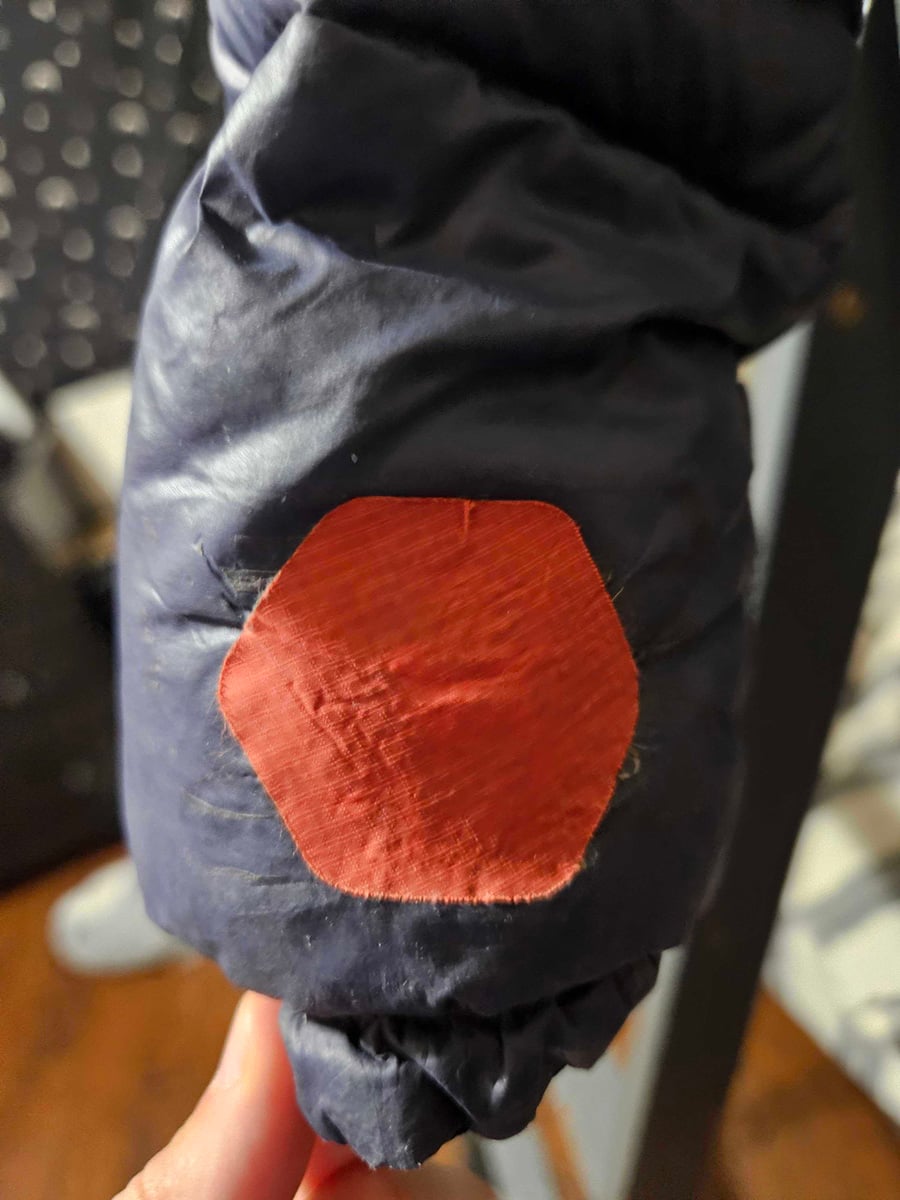
Sometimes the repair needed is not to fabric but instead to elastic drawstrings. My wonderful, lightweight windbreaker had the elastic dry rot. My mom rethreaded it in the wrists, waist, and hood. Now it is ready for another 15 years of use. (It also needed a patch from a tree-snag, which is shown above.)
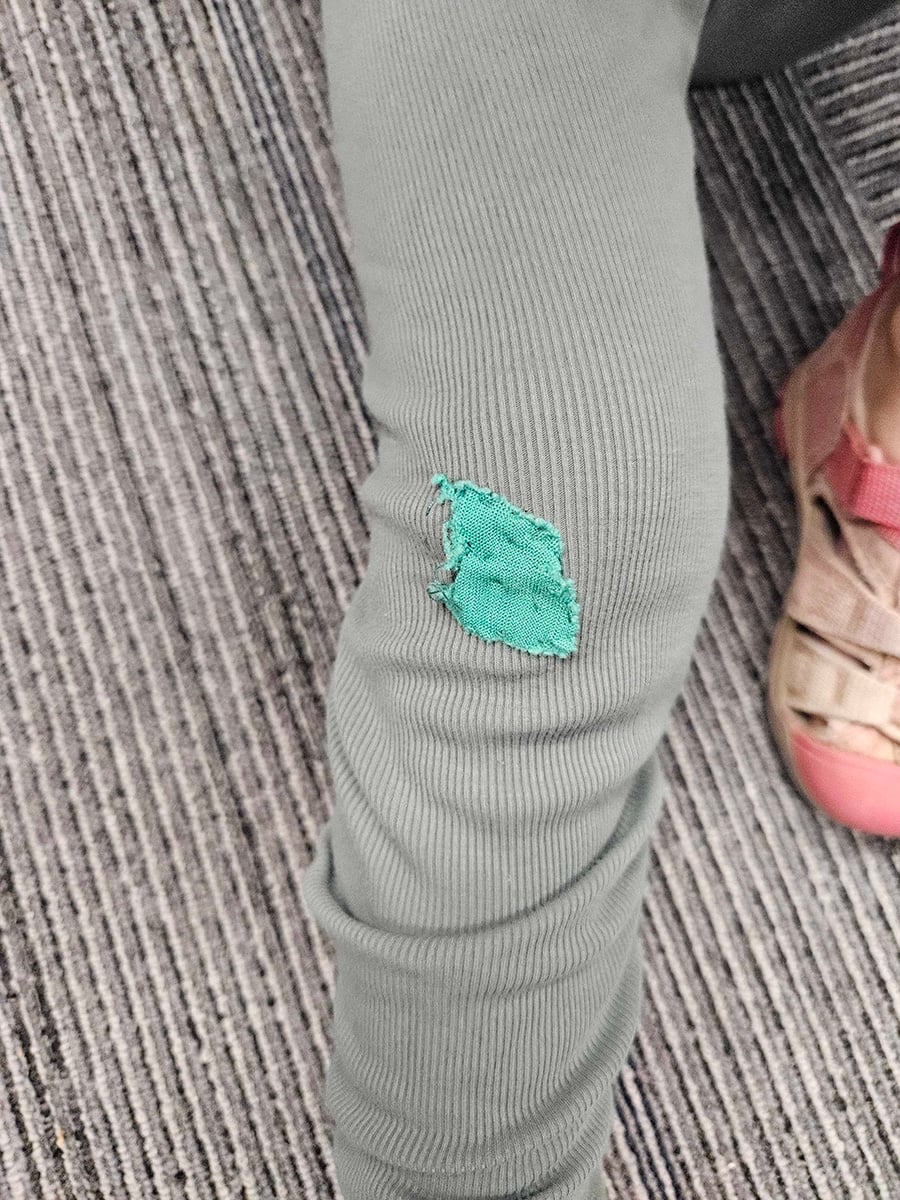
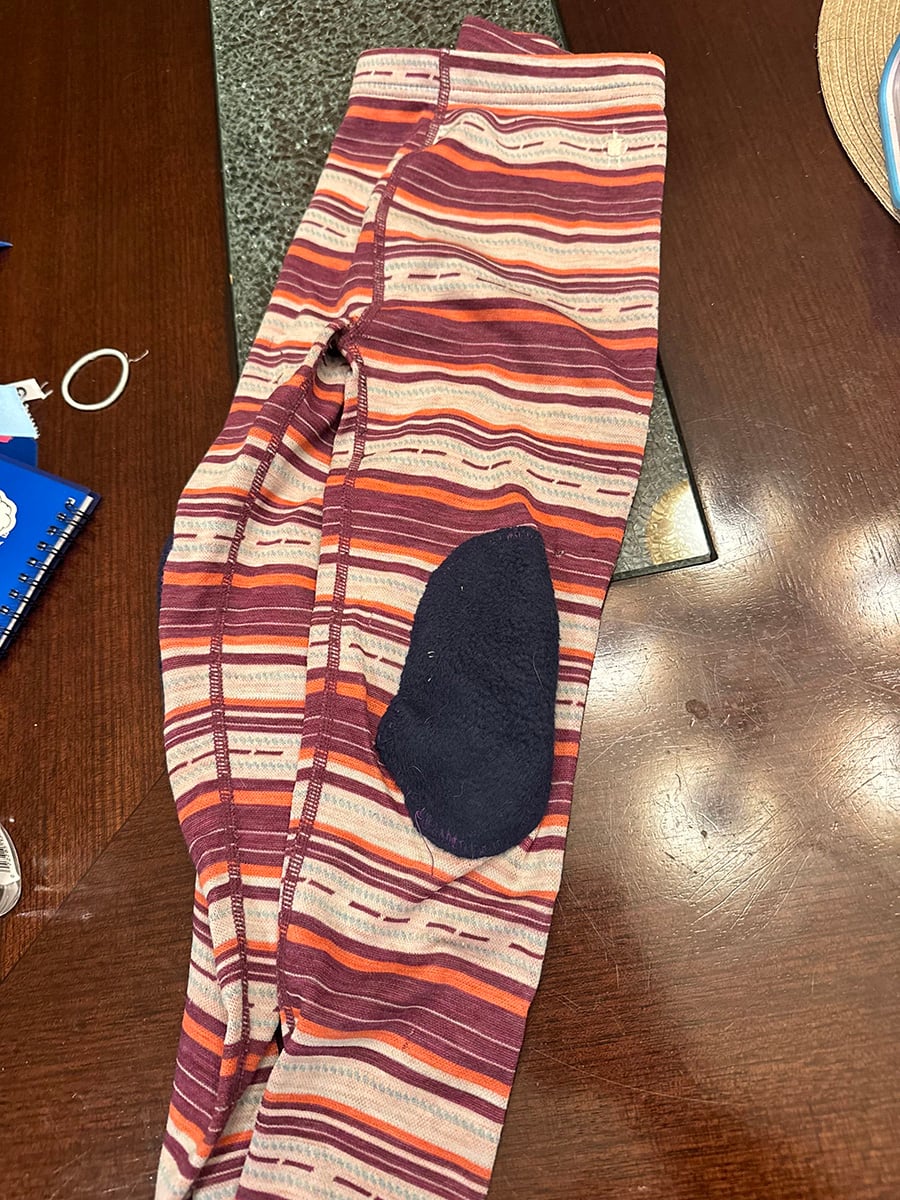
For knit clothing, if you don’t need a waterproof patch, you can use old fabric or clothes for patches that you make yourself. I like to use old nylon stuff sack for big patches on outerwear, but old clothes certainly look more fun. You can reduce your need to repair knees on pants if you buy pants for kids with some kind or reinforced knee.
DIY Tent, Pack, and Similar Items Repair
Tent poles can be splinted in the field and replaced later. I carry this little splint kit. For when you need a replacement pole, Tent Pole Tech is a great choice. They have replaced and restrung really messed up tent pole sets for my department at work (I’m a geosciences professor), but they also can send you individual pieces to replace yourself.
It is fairly easy to restring tent poles as long as you figure out what size stretch cord you need. This can be really good for older tents where the elastic has gotten too stretched out. TMM member Jami restrung her 3-person tent in <30 minutes.
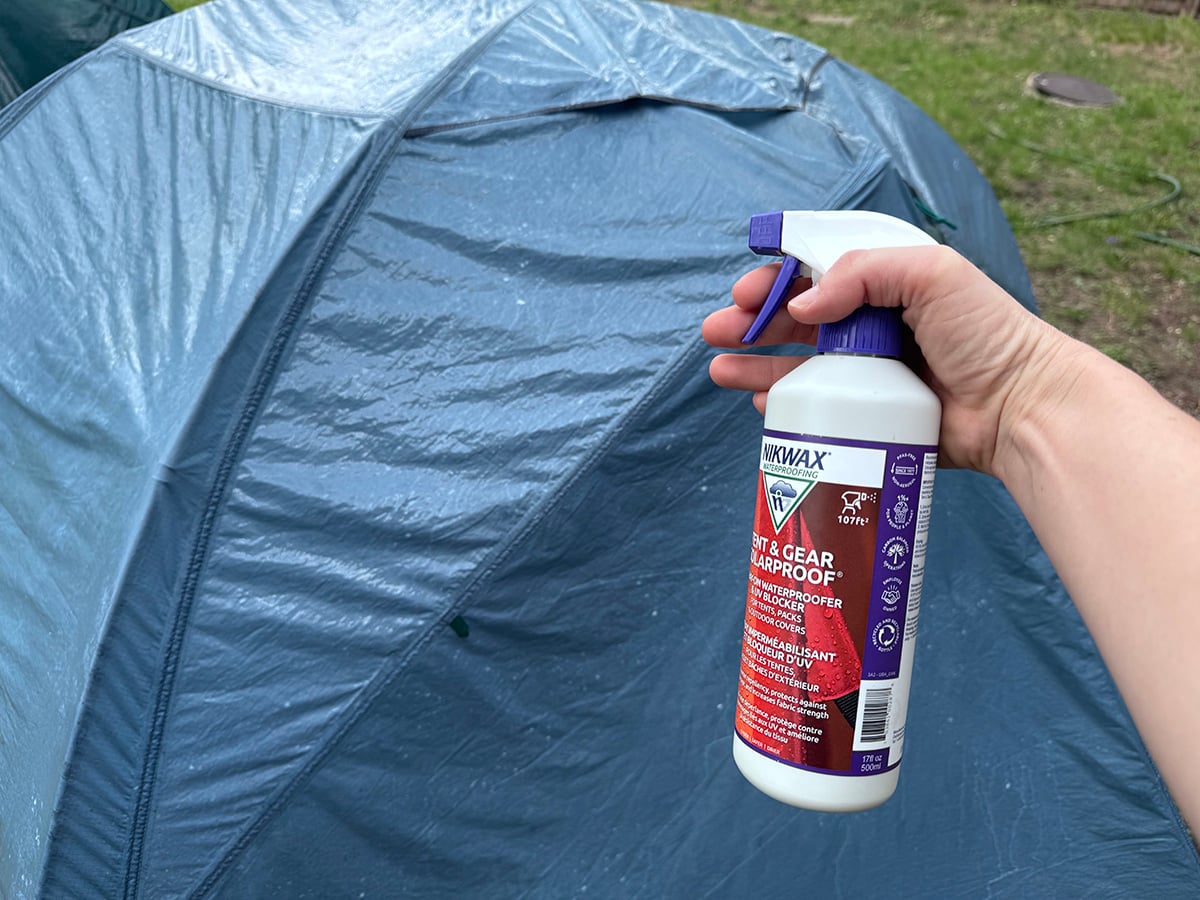
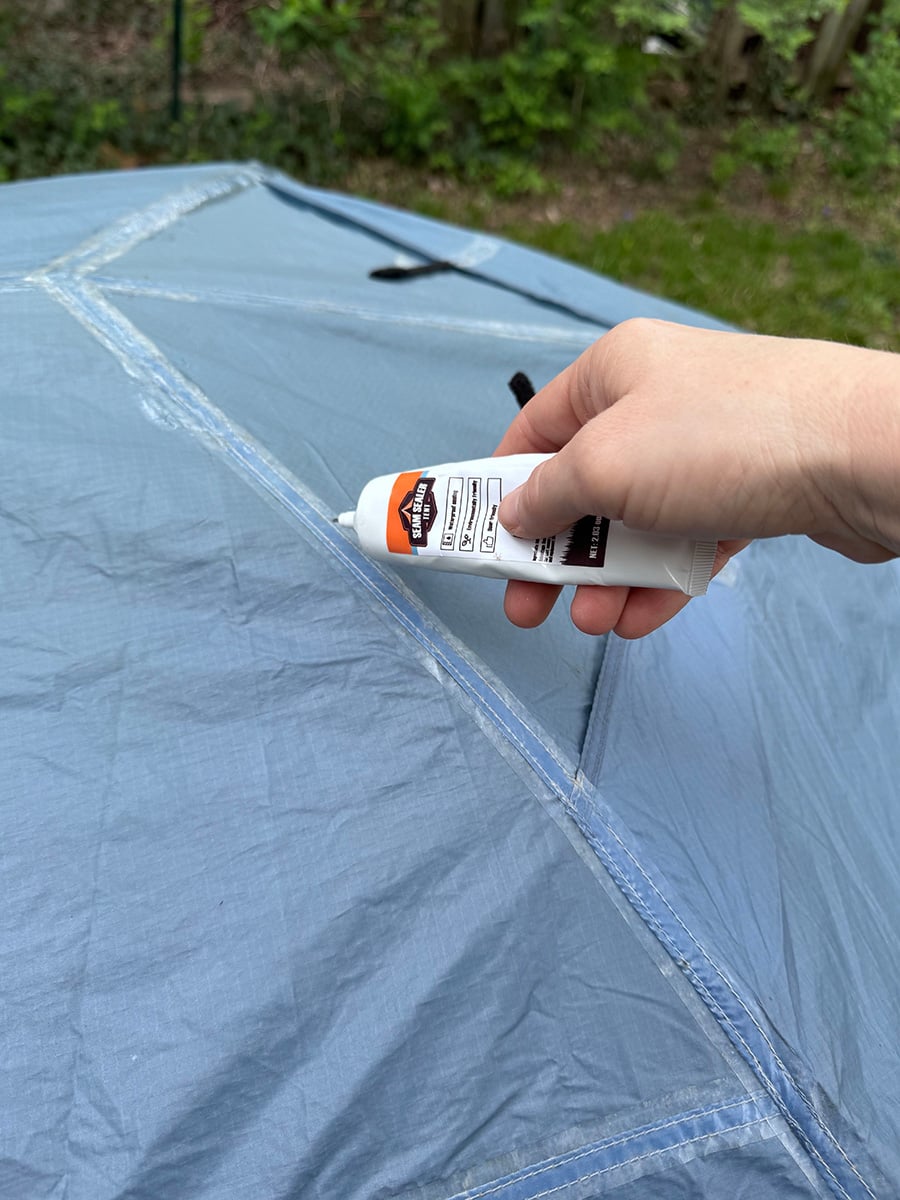
TMM member Laura has used durable water repellent (DWR) spray and seam sealant to refurbish a tent after extensive use (they thru-hiked the Appalachian Trail last year!). Her husband took the refurbished tent back on the trail for a few weeks this spring. DWR spray can also revitalize rain gear.
Repair tape works well for holes in the tent itself using the same advice as for clothes.
Before you set up, remember to look for potentially falling branches to minimize repairs (and injuries). Also, keep your tent far enough away from fires.
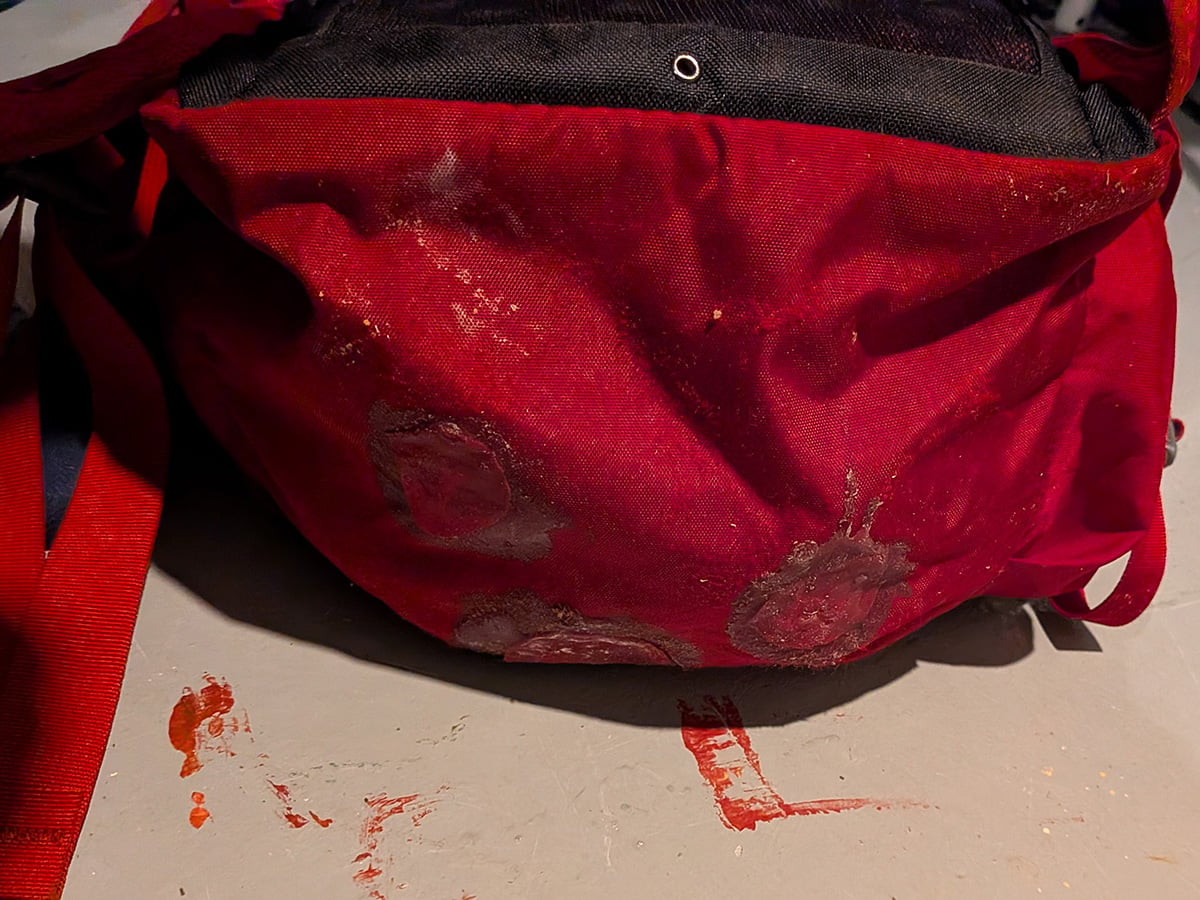
I repaired a backpack that my son ripped up sliding down rocks with climbing gear inside. I used seam grip to attach (and totally cover) patches that I made from old stuff sack. I patched on the inside and outside to keep the hole from getting worse.
I have a brand-new Big Agnes bag that has some defective fabric. Because of their turnaround time for repairs/warranty assessment, I am using one of their sticky patches to cover the hole while I use the pack for an upcoming trip, then I will send it in to be assessed/repaired. In this case, it’s a warranty issue, so I am trying to preserve evidence of the warranty-related issue while also keeping the pack from tearing worse.
DIY Ski Repair (Yes, Really)
My brother was telling me last night that he repaired skis recently. He was walking to the parking lot putting his skis down on the rear tip at every step. The plastic piece that keeps the ski tips protected broke/fell off. He bought epoxy-resistant tape (resin tape), built a mold for a new plastic bit, and then created one out of epoxy. He is also being more careful to not drag his skis along the ground anymore.
Your Own DIY Gear Repair kit
At home I keep shoe goo, seam grip, repair tape, sewing needles, thread, masking tape to hold repairs together, and an old stuff sack.
On the trail I carry seam grip, repair tape, a pole sleeve, elastic for poles, repair patches for sleeping mats. I also keep duct tape wrapped around my hiking pole for easy use in repairs.
Repairs When It’s Beyond Your Skill
When you can’t manage a repair, then you have a few options before just tossing the gear. I once threw out a stove without realizing all I needed was to replace the fuel pump (a $30 repair at the time on a >$150 stove!). Man was I upset when I replaced the stove later. So figure out if you can repair something or someone else can repair it before you toss it.
I’m a geosciences professor and we run field trips where students camp using department owned gear. We have two giant REI tents that are a little confusing to set up. Over time, students ended up bending poles on both the tents. Tent Pole Tech was able to repair the entire set of poles for both tents for just a little more money than what it would have cost us to have them send repair parts. Way easier for us that way!
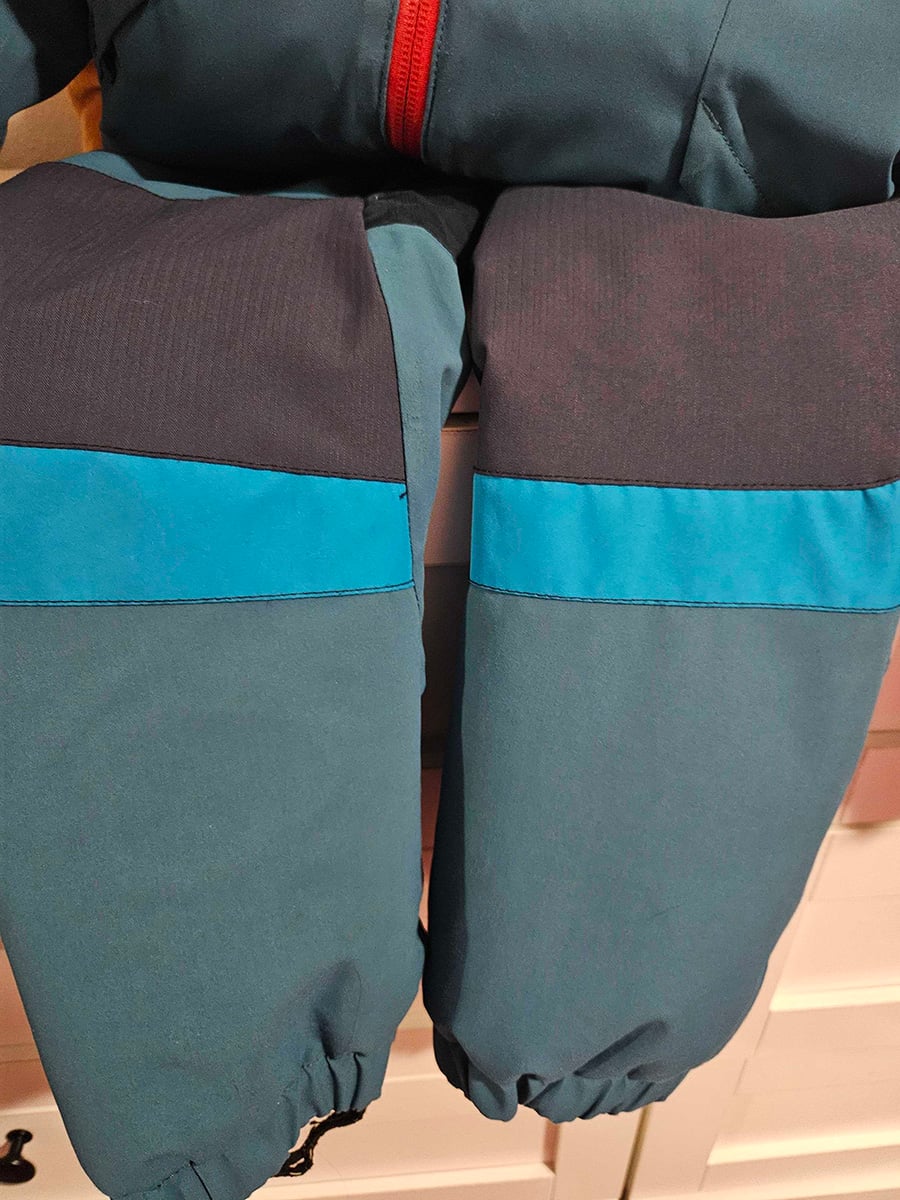
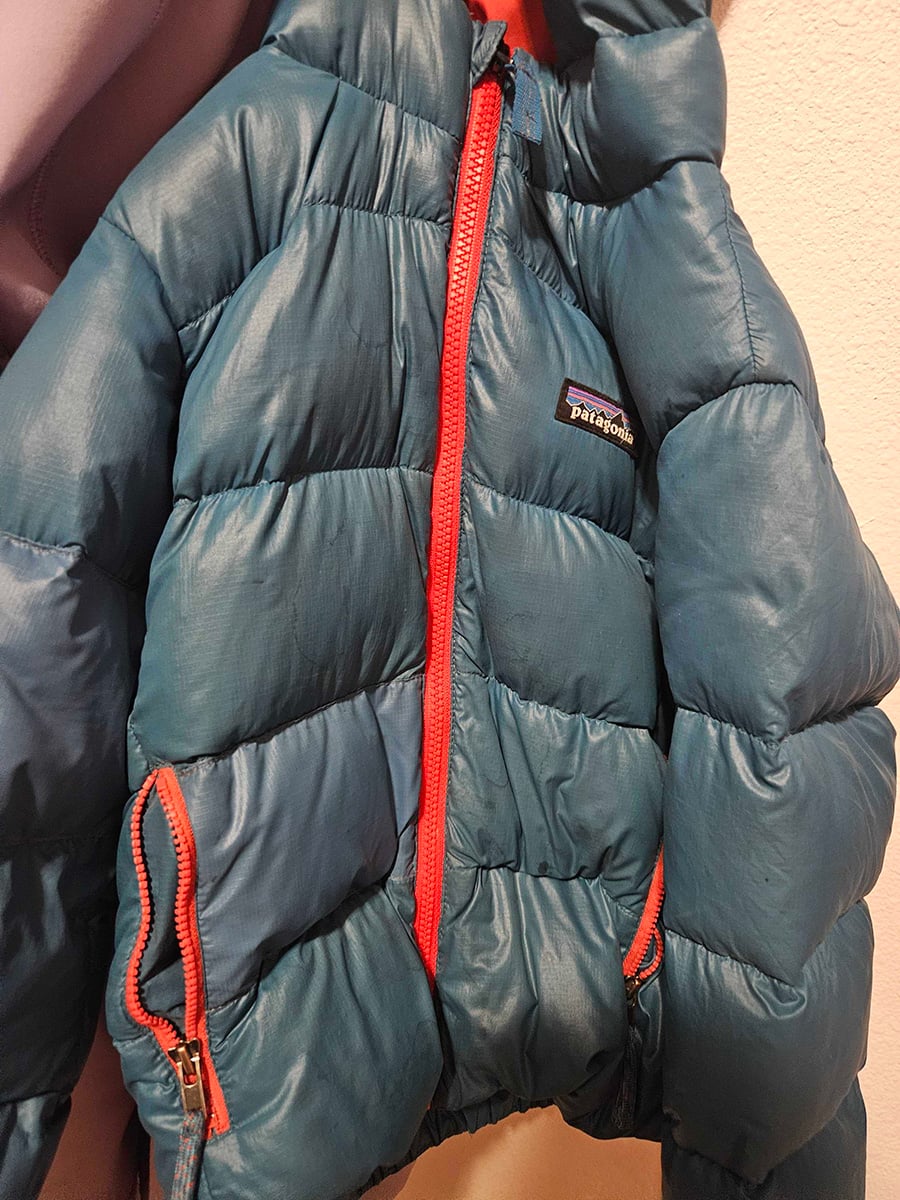
Patagonia will repair their gear for a reasonable cost. TMM member, Anna, says, “Patagonia has an amazing repair service. Pay $5 and mail in gear to be fixed. This snowsuit had the knees completely replaced and blue puffy had a brand-new red zipper put on.”
Big Agnes will also repair gear at a reasonable cost. They are committed to keeping gear out of landfills if it can be fixed.
I have had good luck with local dry cleaners as well for gear repair. They can usually repair zippers on fleeces and jackets, thus greatly extending the life of the clothing.
DIY Gear Repair Can Save Your Gear and Money!
Remember, you’re balancing cost, durability, and weight. Sometimes compromising on weight or cost will lead to better durability, potential resales, and fewer headaches. Keep a repair kit handy when you’re on your adventures, and a more serious one at home so that you can repair your gear before the next adventure.
Related Articles
- Camping Gear for Kids
- Camping Gear For Toddlers
- Gear for a Family Thru-Hike
- Women’s Backpacking Gear
- How to Clean Your Outdoor Gear
- Nikwax Products for Improved Gear Performance
DIY Gear Repair and Maintenance
© 2026, Tales of a Mountain Mama. All rights reserved. Republication, in part or entirety, requires a link back to this original post and permission from the author.