
Who is this post for?
This post is for everyone, but… we are really focusing on parents of neurodiverse kids! Whether your child is formally identified/diagnosed or not, if you think your child experiences the world differently, this post is for you.
Neurodiversity is a broad term. We have personal experience with ADHD, anxiety, and autistic kids, including pathological demand avoidance (PDA). This probably means that our experience is relevant for parents of kids with sensory processing issues as well, as many autistic kids are sensory seeking or sensory sensitive.
We hope some of the following tips will make adventuring with neurodiverse kids easier!
This post may contain affiliate links. As an Amazon Associate and member of other affiliate programs, if you purchase something through one of these links and use the discount codes provided, we may earn an affiliate commission at no cost to you.
All products and brands recommended are hand selected by our team, so thank you for supporting us by clicking through!
What will you learn here?
This post is for anyone who wants to better support their neurodiverse kid with more time outside. We are going to think about ways to modify (or not) adventures to support the particular needs of your kid. We’ll also help you think about what types of adventures will work best, and which ones you want to avoid.
Every neurodiverse human is different, so this is not going to be prescriptive. Instead, we will share what has and hasn’t worked for us, ideas to consider, and possible approaches to increasing outdoors time for your particular kid.

General Points to Keep in Mind
Everyone is different. I know we just said it, but remember that every neurodiverse human is different, so what works for one family (or one kid in one family) may not work for another (even in the same family). Keep trying until you find what works for your family and your kid.
Timing matters. Think about what timing works best for your family. Our family feels and functions much better if we get out early, move our bodies, and get fresh air. In fact, this is good advice for anyone (neurodiverse or not). Try to move your body every day, ideally outside, before 3 pm (our typical low-point of energy for the day).
Ask for input from your kid. Your kid knows themselves best, so if possible, try to find out what they would like to do. If they want to spend a short time sitting still in nature, let them do that. If they want to do something you think is crazy, but it isn’t dangerous, run with it.
Respect your kid. This goes hand in hand with the previous point. Remember that your kid has opinions. Maybe you can’t do exactly what they want, or you have to guess what they want because they aren’t talking, but you can respect that they know what works and doesn’t work for them. Sometimes you have to push through some resistance, but you should know your kid well enough to know when you need to do the pushing.
Nature therapy. Getting your kid outside is nature therapy. Nature is so regulating, for everyone, so getting the time and space to refresh yourselves in nature is going to keep everyone better regulated. This is the underlying motivation behind movements such as Forest Bathing (or Forest Therapy), and it applies to kids as well as adults.
Special interests. Is there a special interest your kid has that can be leveraged into outdoor time? My daughter loves to tell stories, and she has developed particular stories and universes that she only engages with outside. We know that if she is dragging on an adventure, we can ask her about one of those universes, and she’ll perk right now (and get distracted enough to finish the adventure). For example, maybe you can get a train-loving kid building “trains” in the woods.
ADHD Specific
If you have a kiddo with ADHD, you know that ADHD presents as hyperactive, inattentive, or both (combined). The needs of these kids will be different, but some general principles still apply.
Most ADHD kids have some tendency to hyperfocus. You can leverage this – they will get interested, and stay engaged rather than wanting to do something else. Try to get them excited about what you are doing, or try to build adventures around interests they already have.
Distraction may be less of an issue, and instead can be an asset for being in nature. Sometimes the diffuse attention of someone who can easily be distracted means that they are better at noticing unusual plants, animals, or landforms. This is great to really lean into. Talk up how wonderful it is that your kid is so good at noticing what is going on around them, and what a superpower that is. It can help to counter some of the constant, “pay more attention” these kids often get at school.
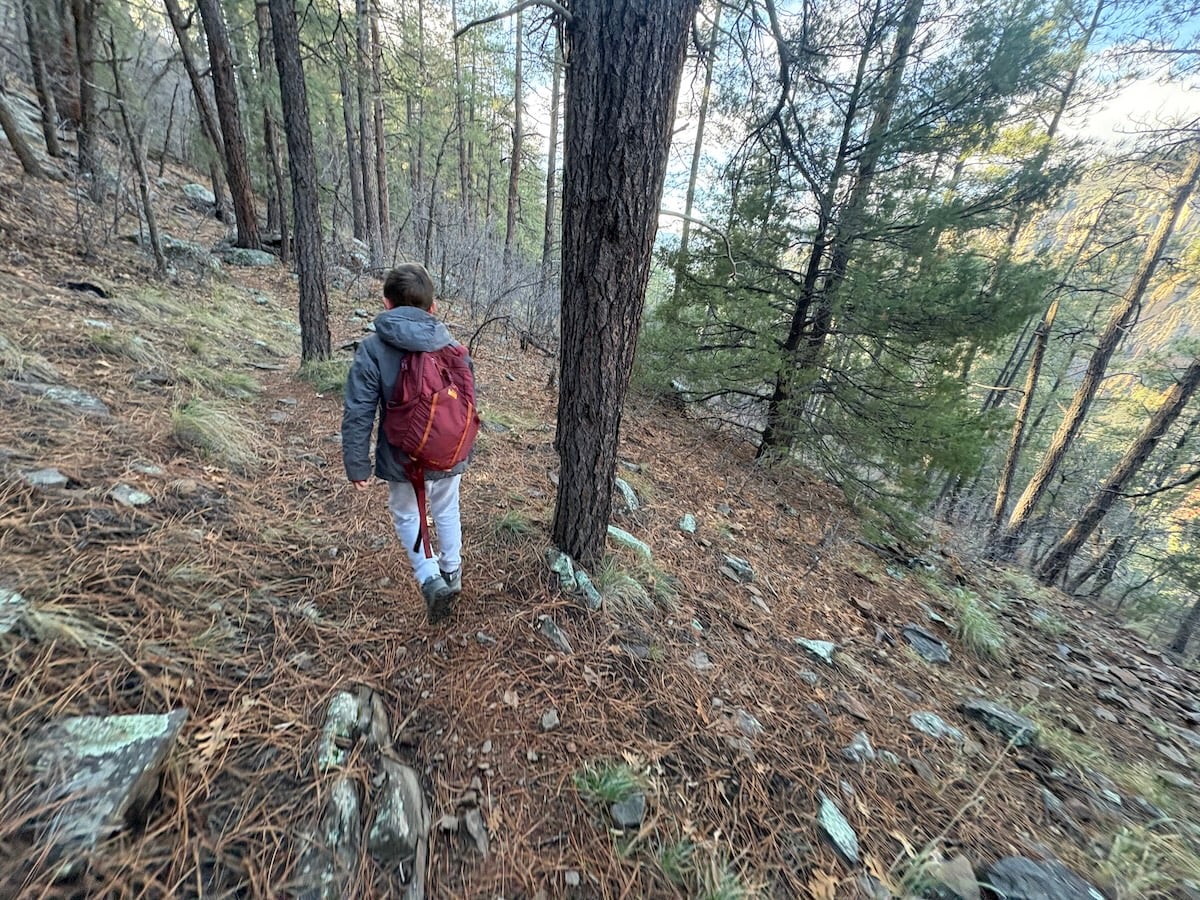
Don’t expect too much of your kid, especially at first. Set flexible goals (or process goals) rather than rigid goals around performance. You want your kid to like these outings, not to resist them. Ideally you want to try to get to goals that are a slight stretch, but still achievable. This “Goldilocks” (just right) challenge will push them while also letting them see success. Remember, even going to a playground and trying a new part of the equipment can feel like a really wonderful goal.
Goals, and sometimes rewards, can help keep them motivated. The rewards can be small – snack spots, treats (chocolate in hip pockets of packs can be really helpful), rocks to jump off of – but they will help your kid have small goals to move towards. When my kids were younger (and honestly, sometimes still), if they started to flag, we would point at a rock (or tree or stump) in the distance and say, “I see a chocolate rock [or stump or tree]”. They would dutifully get to that point, then get their reward. On one hike, they talked about vanilla scrambles and chocolate scrambles and other silly things, but they were having so much fun associating food with the trail, they forgot to ask for their rewards regularly.
As your kid gets more experienced, you can have them take more of the lead. Mine love to plan trips, and then to be the leader of the trip itself. It keeps them really invested in the process and the event itself. The planning can be small (take charge of snacks for the trip) or big (plan the route). Scale it as your child gets more experience.
Anxiety Specific
If you have an anxious child, it can be hard to think about adding one more thing that will make them even more anxious. However, the time outdoors will likely be really good for them – remember, nature is therapy.
It can be helpful to try to figure out the specifics about what is overwhelming or anxiety inducing. For example, if your kid really is nervous about weather, have a plan for what to do in a variety of different weather scenarios. If the kid always wants details about where you are going, go over the adventure plan ahead of time… don’t try to make it a surprise.
Start with situations that are more comfortable for your child. Learning the woods behind your house really well will be easier for them to do than driving somewhere far away and learning about those woods. Backyard adventures may be a better choice initially, even though you are super keen to take the kids somewhere far away and exciting.

My uncle loves to tell a story about my cousin where she was really resisting going out to the beach. He finally figured out that it was because the wind was hurting her hair. So, he arranged with her that she would lie down on a blanket with another blanket over her. She didn’t need to do anything else. Slowly, at her own pace, she crept out of the blanket and enjoyed playing on the beach. If he had insisted, or pushed the issue, she may have refused to go many times. This way, it was a learning experience for her that she could find a way to make the beach comfortable even on windy days.
Be willing to live with your child’s non-negotiables. For example, my daughter absolutely refused to be in the back when we hiked, biked, or skied. She was afraid we would leave her behind. It was super annoying. We had to figure out how to keep her in the middle or front all the time. My son got irritated with her not rotating through all positions in the hiking line. I got sick of riding behind her, especially on mountain bike trails, because she would suddenly stop halfway up a hill (for example).
We never pushed this issue, but started to put her in the back mountain biking to let her watch the lines we were taking. She understood the reason for this in short, controlled settings. Eventually, she was willing to be in the back on mountain bike trails because she realized it was helpful to follow a better rider’s line. Now she is mostly willing to be in the back. Occasionally she’ll freak out and yell that we have to wait, but mostly she is flexible about where she hikes/rides/skis.
It’s ok to push your child a little. We know our children best, and sometimes we know in our gut that they will be ok on an adventure that they are nervous about. We can prepare them, but sometimes they still get anxious. If you think the time is right, it’s ok to be the parent that bribes, cajoles, and pushes the kid to try something new. You never know when it will work out.
My kids were really, really scared to learn to waterski. We eventually offered them an ice cream if they gave it three solid tries, and an ice cream in a waffle cone if they gave it three more solid tries. I felt a little embarrassed getting them the big ice creams, but the girl serving the cones said her parents did the exact same thing. My kids now love to waterski. We had a similar experience getting our daughter to try some scary-to-her descents on her mountain bike, but again, the ice cream bribe came through for us, and now she recently finished her first 50k mountain bike race, walking almost none of it.

Autistic Specific
The various tips we have already given for anxious and ADHD kids will likely apply to many autistic kids. In addition, here are some more tips for autistic kids.
Be careful with sensory issues. Figure out if you need some accommodations to support your kid. My friend has a kid who always wears fingerless gloves to keep his hands comfortable. Other kids may need earmuffs or for you to be aware about staying home if there may be loud noises. I prefer to avoid giving kids technology to solve problems, because I want them to engage with being outside. However, quality ear plugs or earmuffs don’t need to be high tech or bluetooth. We love loop earplugs (low profile) or over ear earmuffs for shop/machine work (better noise blocking, but more obvious).
Sometimes sensory issues are sensory seeking. Does your kid love the feel of water? Maybe a water table is right. Many families have a trampoline because the jumping and movement helps kids get energy out and also provides a sensory experience they love. We don’t have a trampoline, but my kids love using the one at their cousins’ house.
Establish routines, rhythms, or at least schedules. Make sure that if your kid is really rigid, they know what to expect before an outing. If you have a rigid kid, make sure you stick to the schedules you have planned. If you can include the child in planning, you’re less likely to have the rigidity come up when your child has different expectations of a day than you do. We talk about our calendar for the week on the previous weekend (ideally on Friday over dinner), and have it all written clearly out. Then my kids know what to expect, and we don’t end up with someone who loves to swim refusing to go swimming because in his mind it was time for playing with legos.
Habit building, like a daily habit of outdoor time, can be really helpful with autistic kids. My kids are unbelievably committed to their streak of at least 30 min a day of outdoor time (we are a little flexible on days we travel most of the day). They have a >15 month streak, and really don’t want to break it. Now that my son has a broken foot (talk about dealing with autistic rigidity when we found out he can’t do anything for 6 weeks!), they have taken to playing games on the porch to get outdoor time. I also suggested that they use a frisbee to knock over cups (which can be done sitting in a camp chair), and so they also have been doing that. That led to careful adventures farther from the cement pad outside our garage, even though kid-on-crutches was initially certain that he couldn’t do anything. The draw of continuing the streak helped keep him engaged.
If you can, cultivate or draw on special interests. How can you connect special interests your child already has to outdoors time? My daughter loves art, especially weaving and painting. She spends a lot of outdoor time weaving long leaves (unfortunately, mainly from my husband’s irises) or making “paints” or “paper” from natural products.
Conclusions
Get out there with your kid(s)! I know that it can seem daunting when you have neurodiverse kids, but being outside is such important therapy for everyone. It will be easier the more you do it, but you need to get started to get to that point.
Remember, nature may just be the therapy your child needs. When my kids get really difficult, often I just send them outside for a while. They usually come back happier and more cooperative. It’s ok to do as little or as much as works for you. Don’t feel like you need to start big. Maybe a swing and some time pushing your kid is all you can manage right now. That’s ok!
Related Articles
Helpful Tips for Adventuring with Neurodiverse Kids
© 2026, Tales of a Mountain Mama. All rights reserved. Republication, in part or entirety, requires a link back to this original post and permission from the author.