
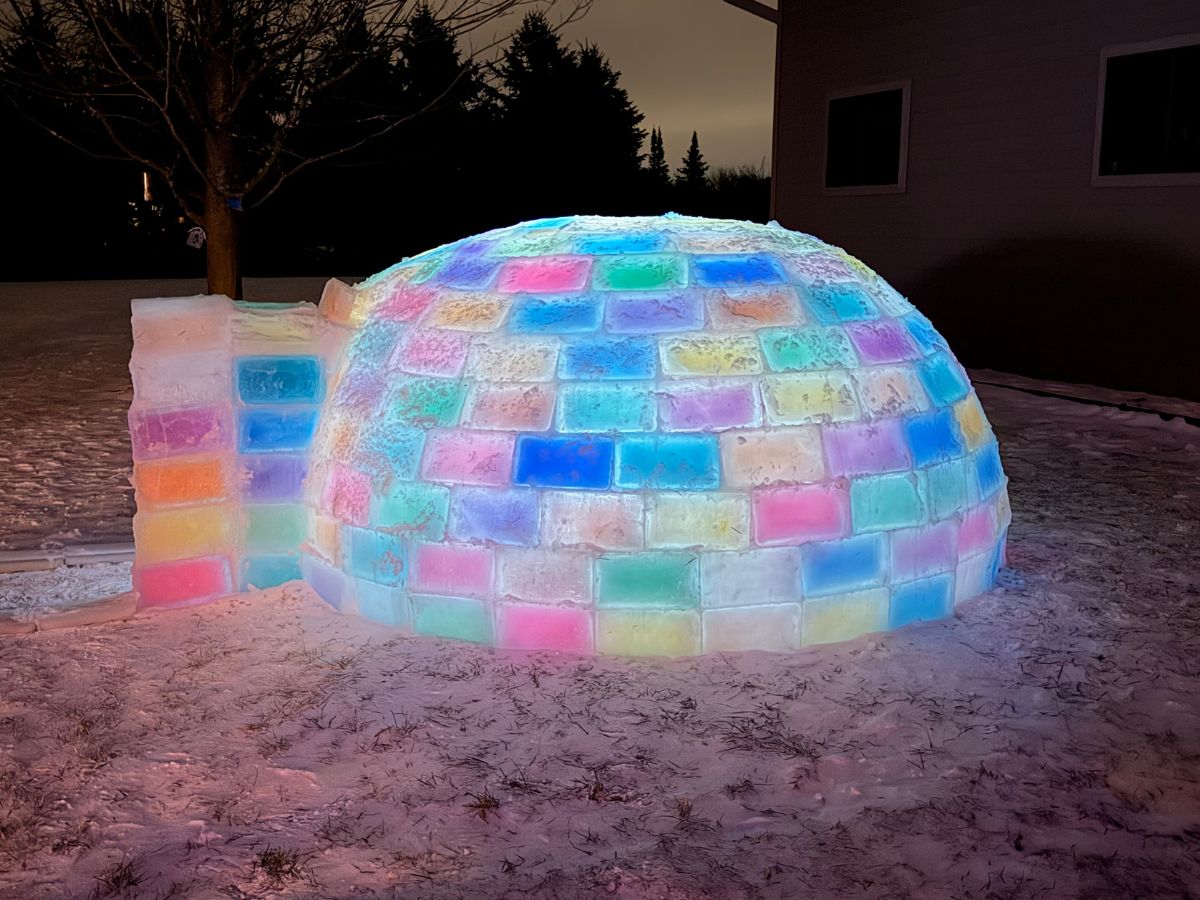
With all the cold temps across the nation recently, you have probably come across a photo of a colorful ice block igloo in someone’s yard. Wondering how to get a colorful ice igloo, ice castle or other fun winter fort in your own yard? Keep on reading to see how we build an ice igloo with colorful blocks. And how some of our team members enjoy their winter forts!
Full disclosure, I am not a professional or structural engineer, just a mom looking to make some backyard fun and memories for her kids! I learn a bit more every year and there are still a few things I will be changing if I make another one in the future. Have any great tips? Leave them in the comments below!
This post may contain affiliate links. As an Amazon Associate and member of other affiliate programs, if you purchase something through one of these links and use the discount codes provided, we may earn an affiliate commission at no cost to you.
All products and brands recommended are hand selected by our team, so thank you for supporting us by clicking through!
Safety First!
Keeping Warm
In order for most of these outdoor structures to be constructed, you need some cold, even frigid temps. It is important to make sure you are dressed appropriately. Layering properly with some base layers and warm outerwear.
Minimizing exposed skin is key. I use a merino neck gaiter and goggles on my face. I will also toss some Aurora Heat Reusable Hand Warmers in my socks to keep my toes warm.
Structural Safety
Anytime you enter a homemade structure, there is a risk of collapse. Be aware of the structural integrity of your igloo and when in doubt, keep out.
If you are worried, opt for an Ice Fort or Ice Castle instead! There will be no blocks overhead and bonus, they are wayyyy easier to build :).
Once temps get above freezing and the igloo starts to melt, no one is allowed inside it at our house.
How to Build an Ice Block Igloo (or Castle)
There are a few basic steps to building an ice igloo…
- Wait until you have a long cold stretch (single digits or below 0*F).
- Freeze lots of ice blocks.
- Build it.
- Enjoy your creation!
Necessary Supplies
Before you begin, you are going to need some gifts from Mother Nature. The first being a long, cold stretch. Freezing blocks is best the closer to 0°F or below. Super cold temps also make construction much easier as things freeze together faster. Next, you are going to need some snow, you don’t need a ton, but snow is necessary to make the “slush mortar.”
Once mother nature looks like its going to help out, it is time to start sourcing your other supplies. An igloo requires a few hundred ice blocks (or more, blocks depending on size). There are many different containers people have used, but whatever you choose, you will need a lot of them. Here are a few different types of containers that could be used.
Container Options:
- 6 qt Clear “Shoebox” Containers (my current favorite)
- Aluminum 9×13 Baking Pans
- Aluminum Bread Pans
- Cardboard Juice Boxes (after the juice is gone, cut open one side or cut the top off)
My first two igloo attempts I used aluminum 9×13 baking pans. They worked ok, but I would lose one or two pans per round of freezing due to the pan cracking or getting a hole in it. They also don’t hold their shape well since they are lightweight aluminum and it was harder to get uniform blocks.
This year I switched to the 6qt clear shoebox containers. (I was able to snag a bulk pack of 36 on sale making each container under a dollar each!) I froze 6 batches and didn’t lose a single container to cracking and they don’t really change shape. The only difficulty I had was getting the same amount of water in each one. I may tape or mark the bins before another attempt to try and stay as uniform as possible as I was trying to fill about halfway.
If you want to make colored ice blocks, you will also need some food coloring. The first two times I just used generic 4 color food coloring from the grocery, but the colors were never very vibrant. On recommendation in the 1000 Hours Outside FB group, I tried a pack of 12 vibrant food colors and the colors have been better! They have been more vibrant and color has lasted way longer.
You are also going to need some type of bucket to mix your slush mortar into. I just use some 5 gallon buckets we have around. A saw is also very helpful for trimming blocks to fit. If you are making an igloo, as you start rounding toward the top, you are going to need to trim the blocks a little more trapezoidal so there are less gaps to fill. I just use a simple hand saw, but there are ice saws out there as well that may do a better job.
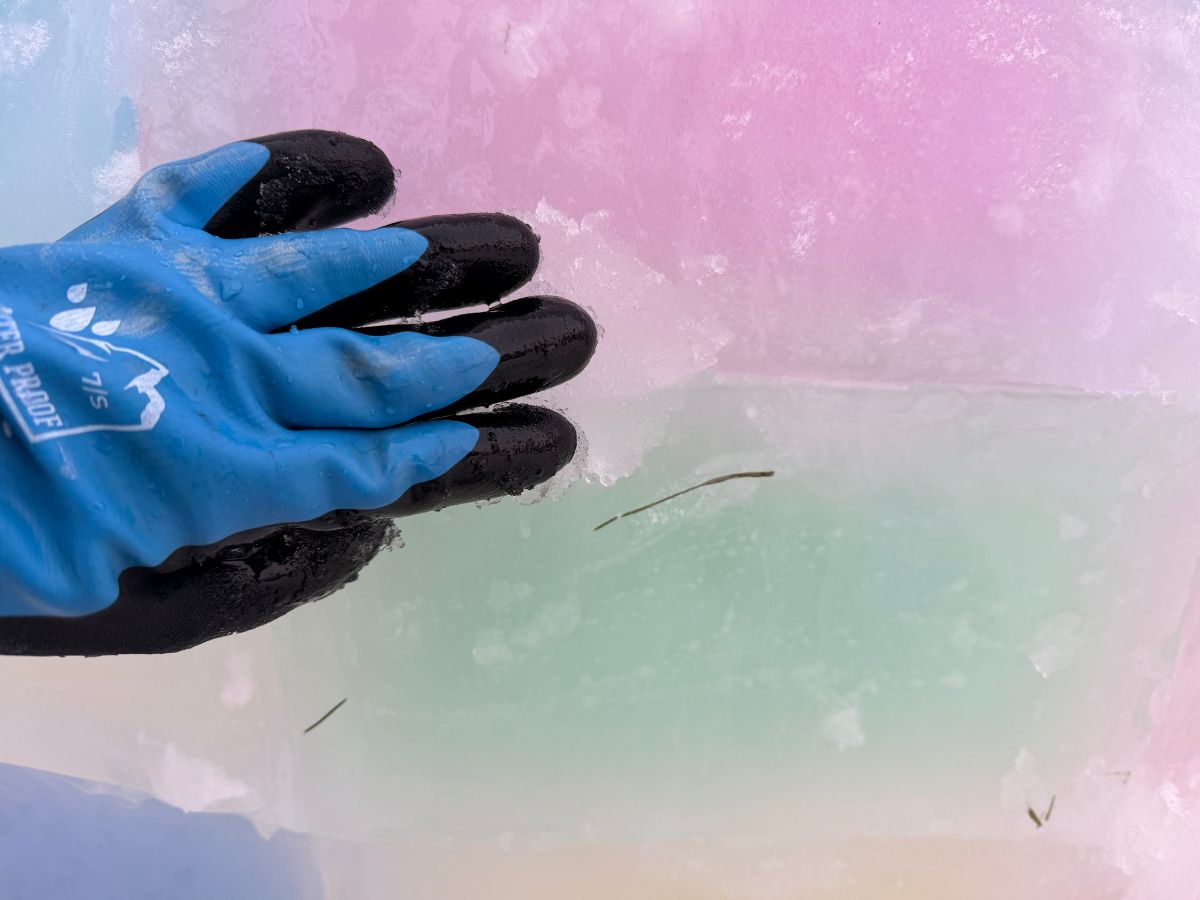
The next essential item is waterproof gloves, like submersible gloves. You will be dunking your hand in a bucket of slush in very cold weather, it is important you keep your hands dry! I have used these Toolant Waterproof Gloves the last few winters for igloo and ice rink making and my hands stay dry.
A new purchase for this project this year was knee pads and I have zero regrets. The whole construction zone becomes pretty icy and hard from slush dropping everywhere. The past few winters I just used a foam pad to kneel on, but my knees would still get sore and sometimes wet. I also reallllly didn’t want to put a hole in my nice snow pants.
I headed to my local Menard’s and picked up a pair of rubber knee pads that were great for kneeling on the ice! These ones from Amazon look identical to the ones I got. The outside is a flexible rubber type material and the inside has foam and nothing seemed to absorb water, which is very helpful.
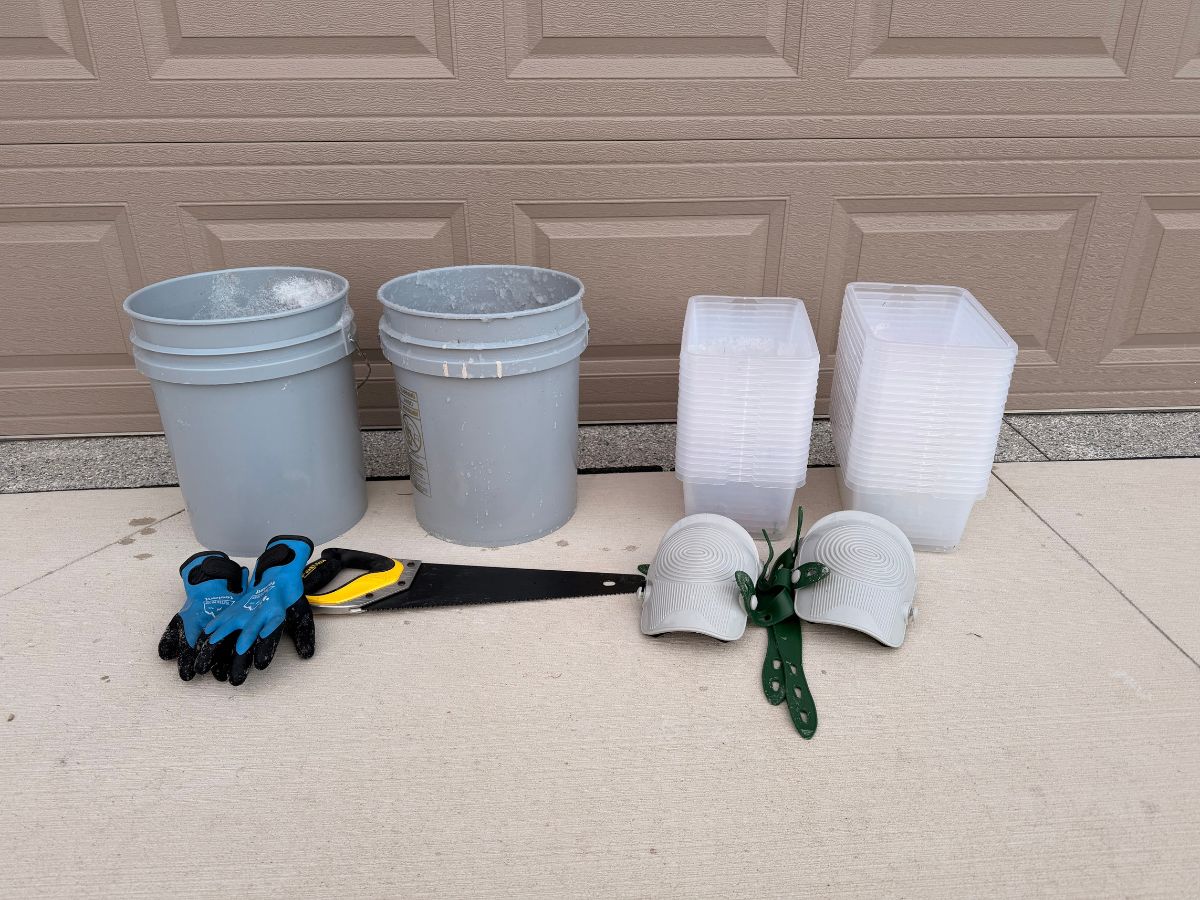
Ice Igloo or Ice Fort Supply List:
- Cold weather and snow
- Access to water, or a pitcher that you fill from the house
- Containers for freezing ice blocks
- A bucket or two for mixing the slush mortar, 5 gallon pails work great for this
- Waterproof gloves
- Food Coloring (if you want colorful bricks)
- Saw (for trimming blocks to fit)
- Knee pads (not required, but very helpful)
- Sled (helps with moving the ice blocks around and into the igloo)
How to Build an Ice Igloo, Ice Fort, or Ice Castle!
Before you begin, think about how much time and help you will have with this. I tend to do this project solo, often after my kids are in bed or at school. For reference, this igloo was 8 feet in diameter, 4 feet tall in the center and I used about 230 ice blocks. I had 25 blocks in the base and tend to lose about 1/2 to 1 block per row until it really starts curving.
Here is a timeline of my build this year. Each time I was probably outside 1-2 hours building. Construction took 6 days, but I could have got it done in 4 if I didn’t skip a day and had a little more time on the 25th. Most days I would build until I ran out of blocks.
- Jan 19 – Started freezing blocks
- Jan 21 – Started building, completed 3 rows
- Jan 22 – Completed 3 more rows
- Jan 24 – Almost closed in the top
- Jan 25 – Finished the top and almost finished entryway
- Jan 26 – Finished entryway and patched holes
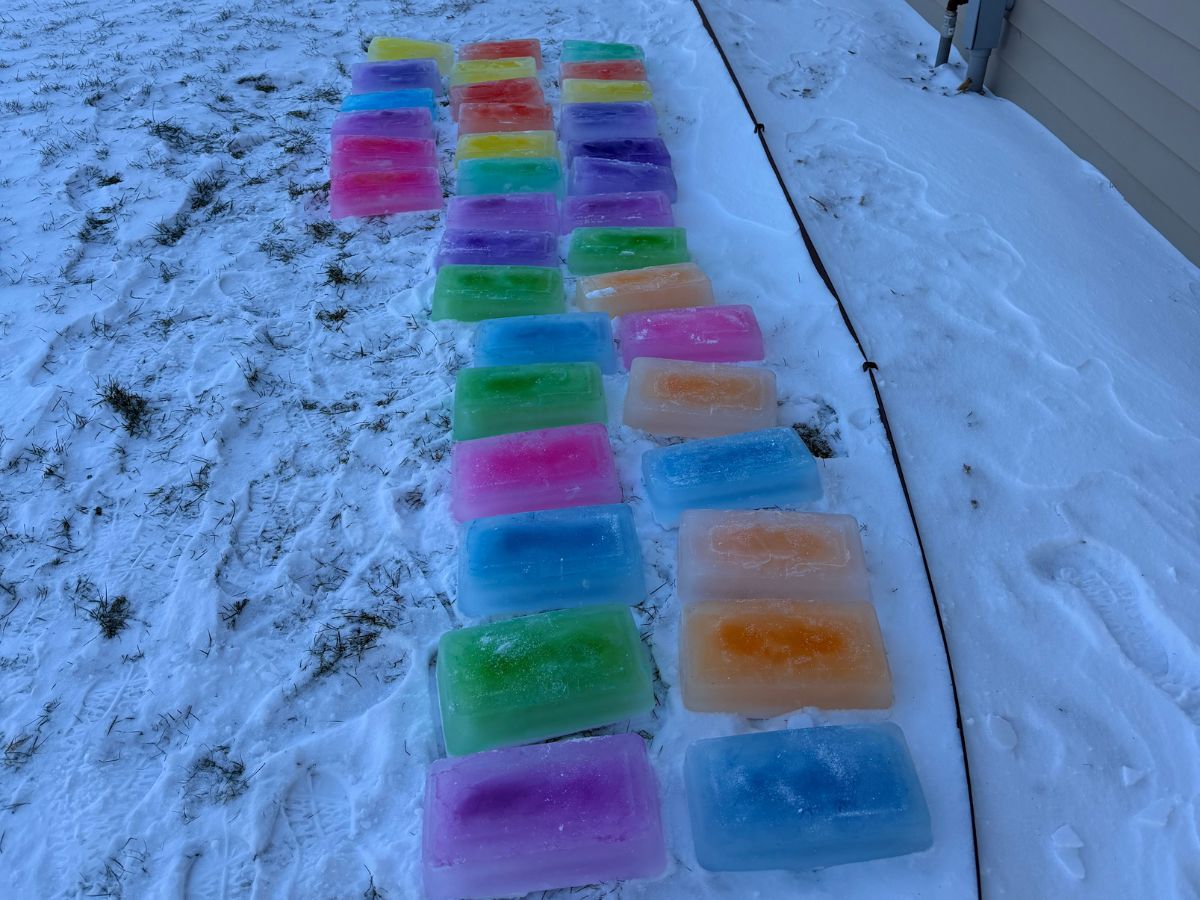
Step 1: Freeze Blocks
This is a long process and you need to start a few days before you plan to start construction on your structure. The more containers you have, the less batches you may need. I had 38 containers and I did 6 batches. Once I had 2 or 3 batches frozen, I started construction.
My method is setting boxes out, using a hose to fill them (we have a host spigot in our garage), squirt some food coloring in and whisk to mix around.
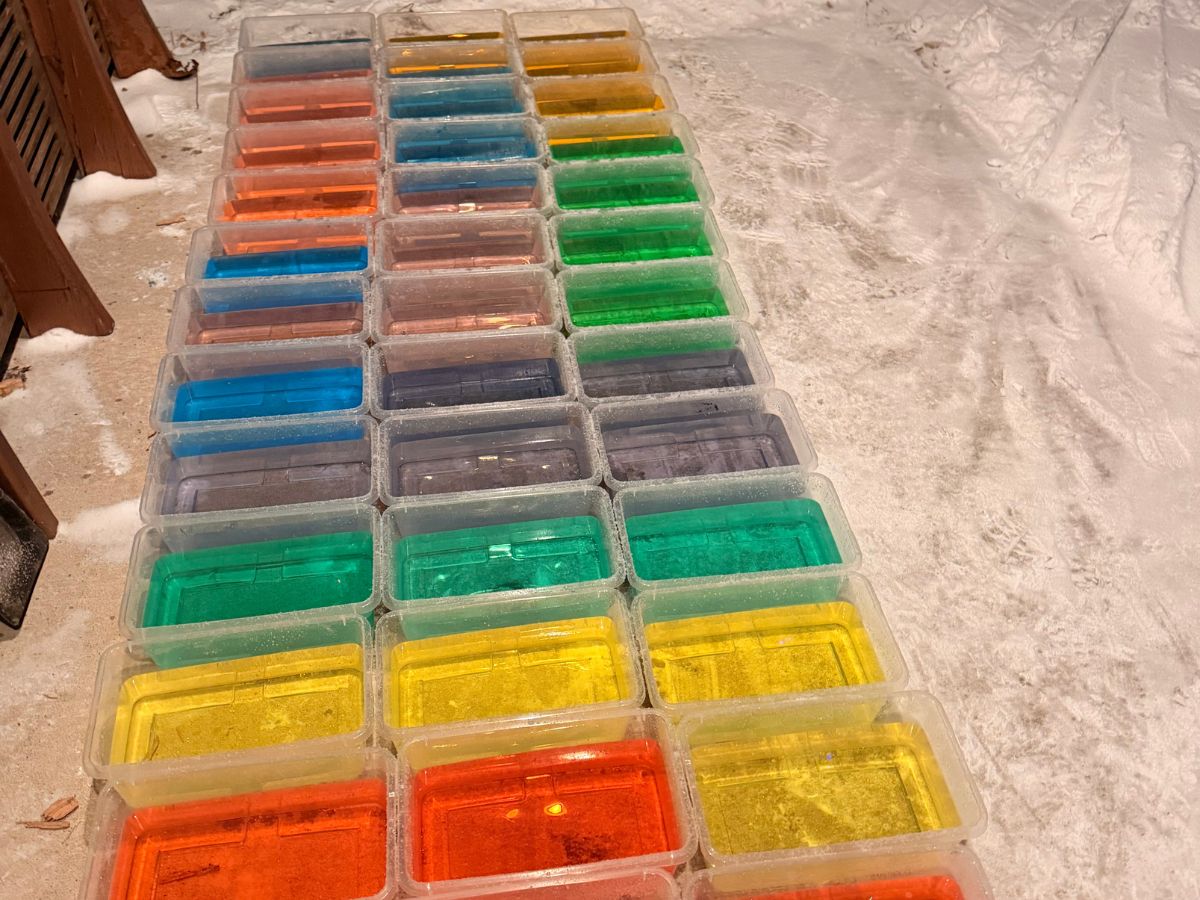
Freezing Time: This question gets asked a lot in the groups, “how long will my blocks take to freeze?” Well, there are a lot of factors at play here. Colder temps give you shorter freeze times. Thicker blocks will increase the time. Food coloring seems to have a slowing effect.
There are a few tricks to get the best freezing… if you have a place where the containers can be off the ground, that is the best. A lot of people use decks, wire shelving would also be good or you can set them on boards. Anything that can allow for airflow all the way around can be helpful. Don’t bury them in the snow as snow is an insulator and can slow freezing.
I just have mine on our covered concrete slab next to our house and they take about 18-24 hours to fully freeze. When the blocks are frozen, pop them out, set them aside and repeat until you have enough blocks.
If your temps are around 0°F or below, probably around 18-24 hours. Above 10°F, probably closer to 36 hours.
Step 2: Chose and Prep Your Site
First, figure out where you are going to build your structure. I build ours on the north side of our detached garage to keep it shaded as much as possible. The less sun your structure sees, the longer it (and the color) will last!
To try and get a nice circle, I place a pole/stake in the middle of my site, attach a string and draw a circle with the other pole by walking around the center pole, keeping tension on the string. If you have snow, stomping down your base area can help as well.
Make sure that the entry is wide enough for you to fit through!
Step 3: Start Construction
Once you have your plan and some blocks, grab a bucket with some water, put some snow in it to make slush and start to build. The first few layers are pretty easy to do. I normally toss a little slush on the ground and then rub some on the contact points between the blocks. I follow my “outline” on the ground and just attach them to each other.
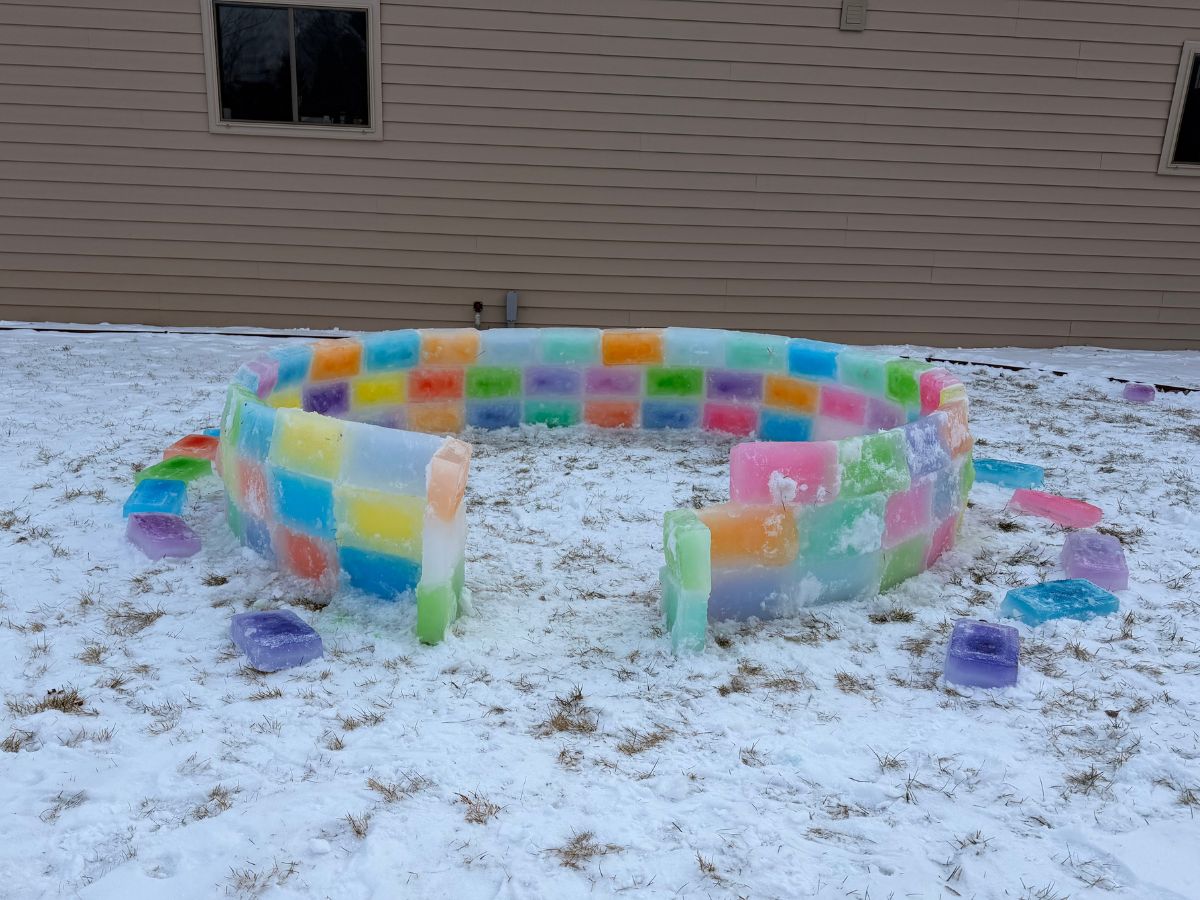
Creating the entryway I have made the mistake of putting my entryway blocks in a “L” shape instead of a “T” shape. In future years I plan to use a “T” (like in the diagram below) to have less gap between the door arch and the dome as it starts to taper in.

The shoe boxes and baking pans both have a slight taper to them, narrower on bottom, wider on top. We use this taper to help make the round shape of the igloo. The part of your ice block that was in the bottom of the container should end up on the inside and the “top” of the ice block should face out. If you are building straight vertical walls for a fort, you may want to alternate the direction of blocks so the tapers can negate each other.
As you finish a row, start stacking the next ones on top. Put a little slush on the contact points of where the next brick will attach. Set it on and hold while filling any small gaps with more slush. Once it seems solid, move on to the next brick and continue on until you have an igloo or a fort!
Step 4: Closing the Roof and Finishing the Entry
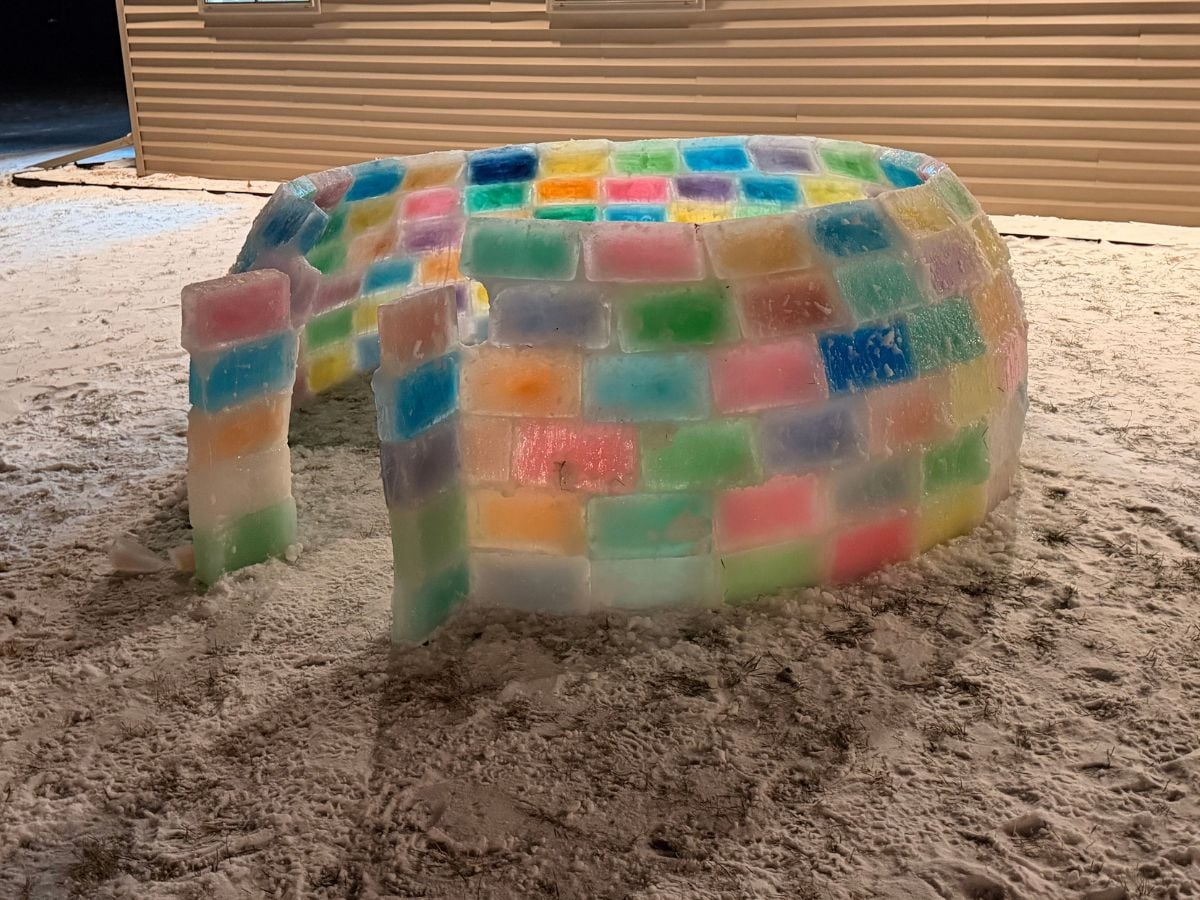
For me, this is the hardest and most complicated part. Your bricks create bigger gaps with each row and getting the blocks to stay put while they freeze can be a challenge with gravity. In the past I have used some scrap wood to help hold up the previous block so it didn’t accidentally get knocked down. This year temps were cold enough it froze and adhered very quickly. Having an extra set of hands during this stage is also helpful.
When it is time start rounding over the igloo, the blocks might need to be trimmed so there are less gaps to fill with slush later on. Cutting blocks to a trapezoid shape should help that process, or cutting some triangles to fit the space in between the blocks.
Once the dome is finished, use any extra blocks to create an entryway! I typically just do a simple arch.
Step 5: Filling the Gaps
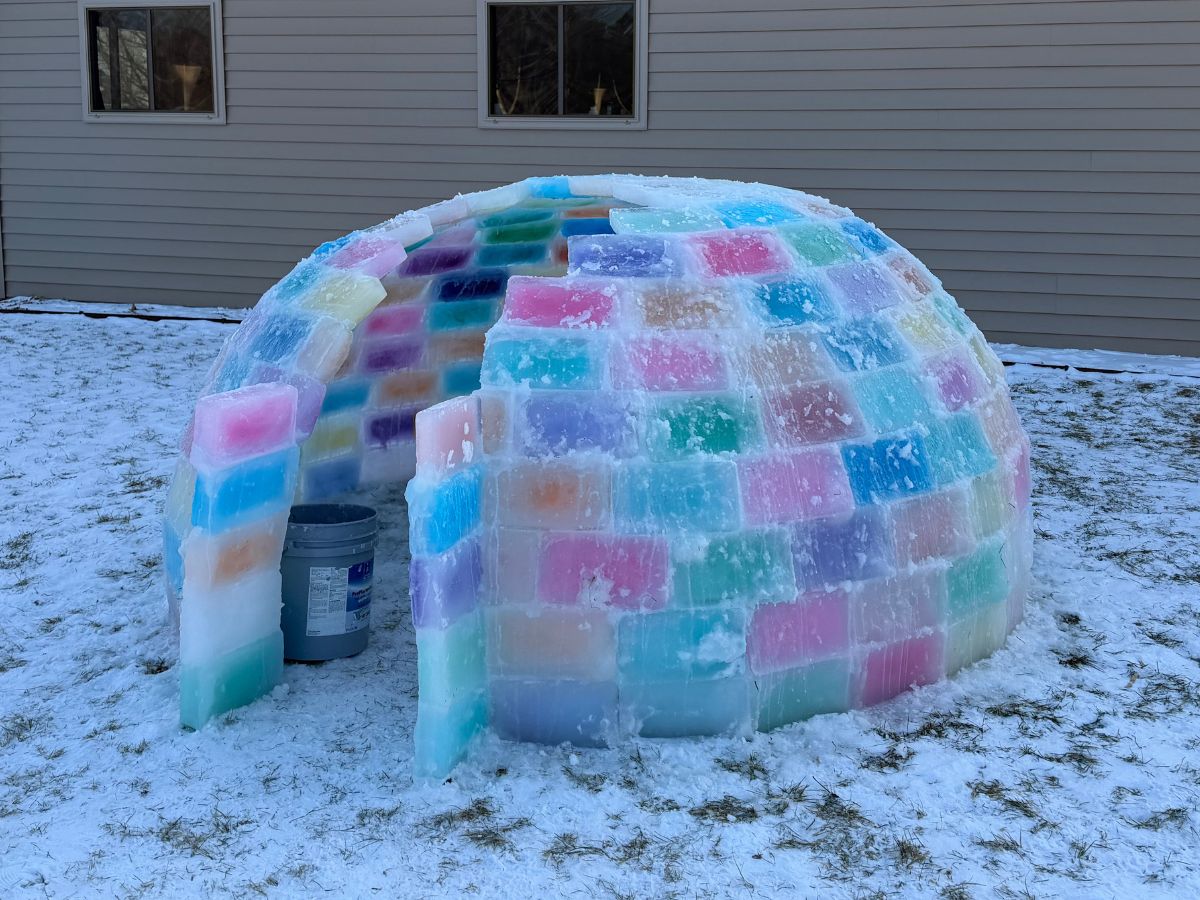
Once construction is complete, get your slush bucket ready again and start filling all the gaps with your slush, inside and outside. The slush will “shrink” over the next day or two, so I normally go back and add some more a few days after. I try and use pretty “wet” slush, least amount of snow possible.
Step 6: Prep the Interior
After you finish, the inside floor and around the exterior base will be very hard, icy, and possibly sharp. We like to fill our sled with snow a few times and bring it in the igloo and put it on the floor. This makes the floor a little softer (and saves the knees of your kids snow pants). Also look around for any sharp icicles that may have formed and pop those off.
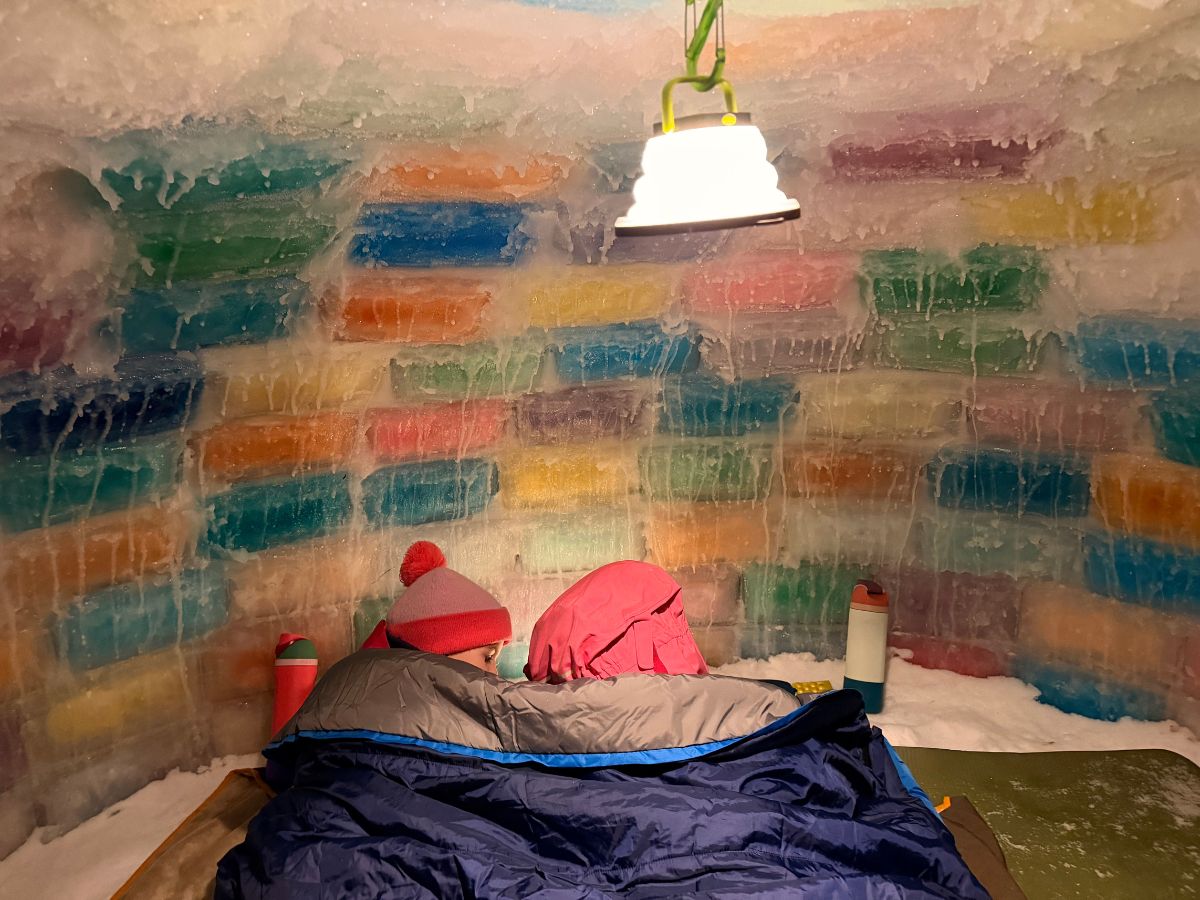
If you want to hang a little light inside, you can use a little screw eye hook and screw it into the ceiling and hang a lightweight light. Just remember to take it out before it collapses!

Step 7: Enjoy Your Ice Igloo as Long as the Weather Allows!
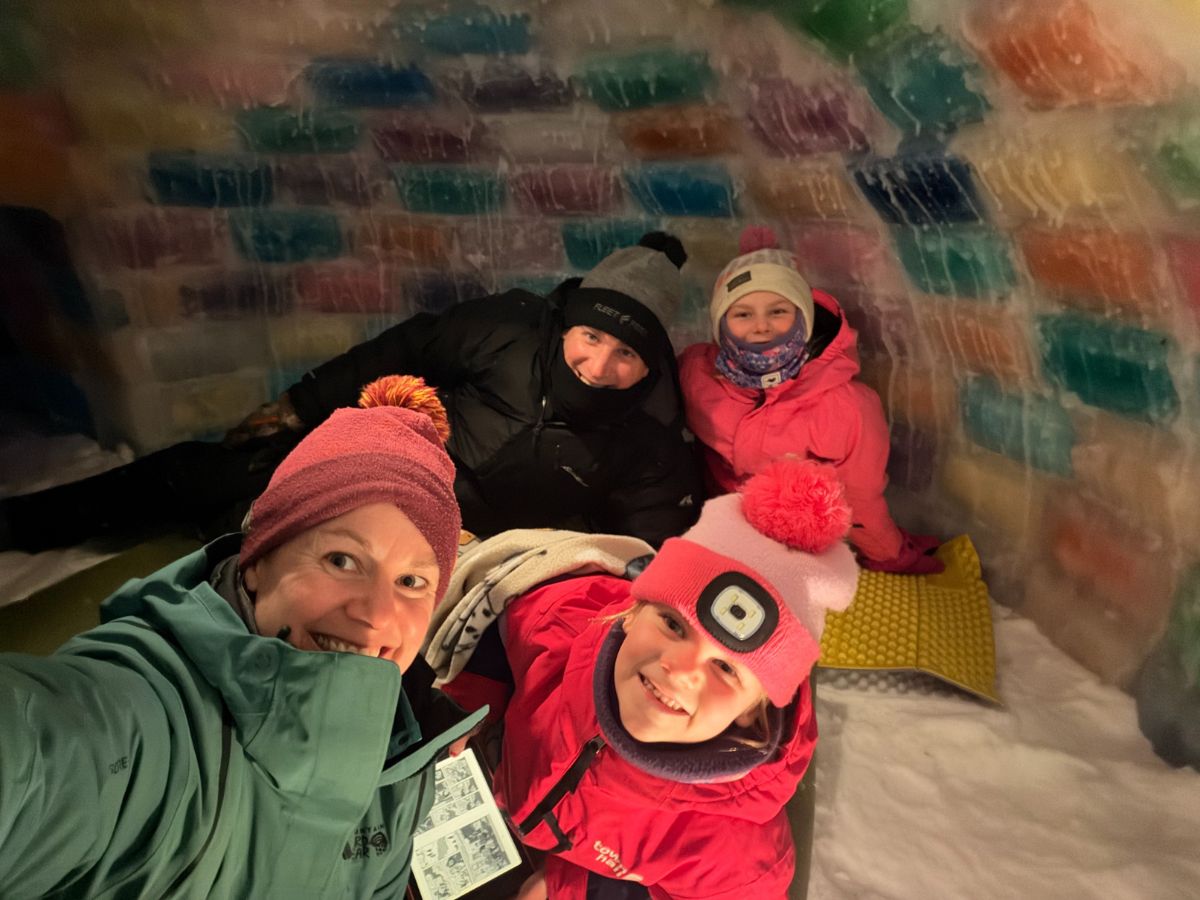
One year it was only 24 hours, this year we have been lucky with over 2 weeks of igloo fun! My kids like to bring in some furniture and eat out there, even played a game of UNO. My girls really wanted to sleep in there, but temps were a little too cold for the gear we had, so we settled for story time instead.

Snow Fort Fun
Ice igloos are not the only way to build winter forts. You can use snow, climbing domes with a tarp or plastic wrap, or make a winter shelter with your Christmas tree and other nature.
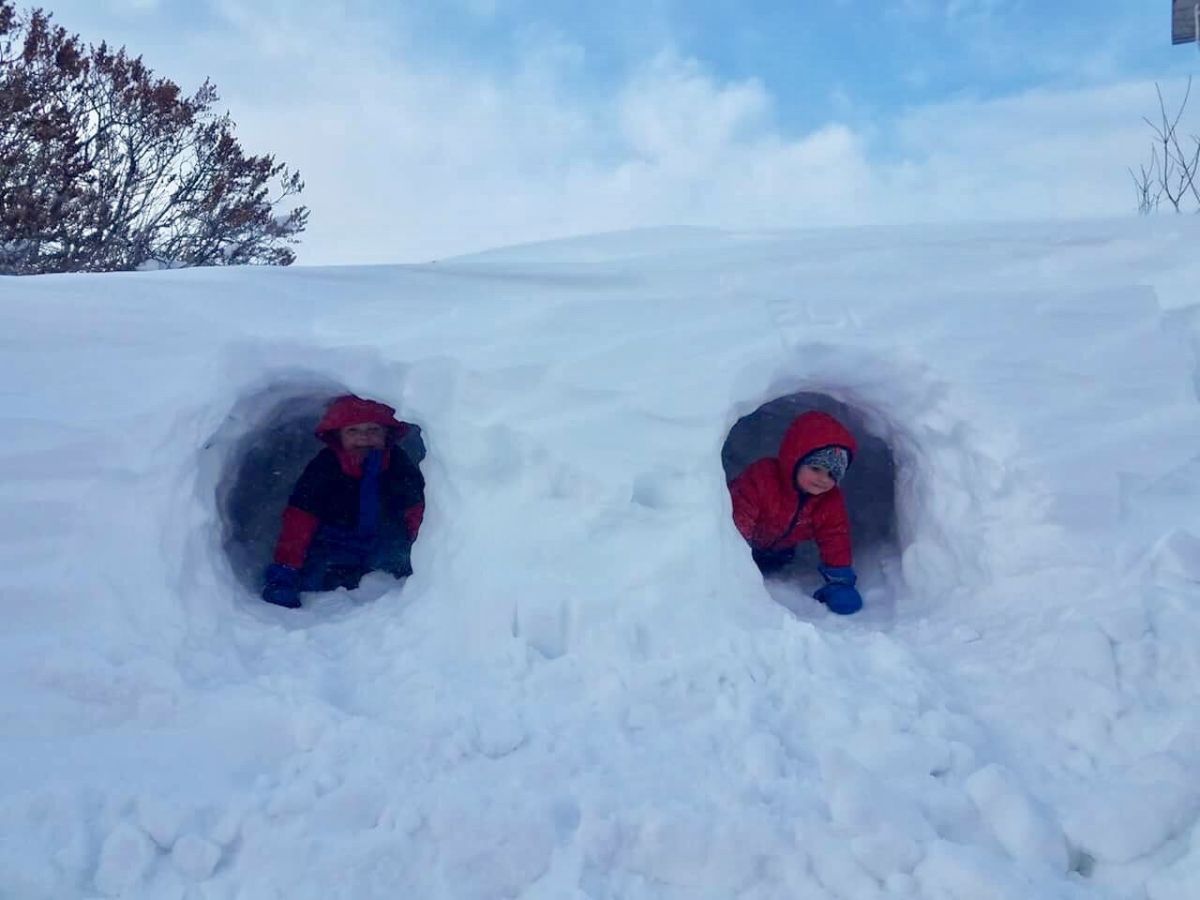
Big snowplow piles can make great forts, but proceed with caution as the snow may not be too stable and there is a risk of collapse when digging tunnels. Parking lot piles can be fun, but know if you are allowed to play on them before proceeding. You may be considered a liability and asked to leave.
The kids really like digging in the snow pile made from the plow. Round holes don’t collapse as much. Start near the top of tall piles. Be creative – tunnels with rooms are fun!
TMM Team Member Amanda
If you have a climbing dome already and are expecting some snow, covering with a tarp or pallet wrap (leaving and entry) can be a fun way to make an igloo, with a much lower risk of any collapse.
For snow caves We like to make a huge pile (sometimes helps to use a snowblower if possible) then wait a few days or at least overnight for it to settle. Then dig in, being careful of sides and top not getting too thin.
TMM Team Member Mary
Learn more about snow caves in our Winter Camping with Kids post!
I remind my kids that the forts melt last! It motivates them to build something. We love the snow castle bricks for building good walls.
TMM Team Member Jess R.
Related Articles:
How to Build an Ice Igloo
© 2026, Tales of a Mountain Mama. All rights reserved. Republication, in part or entirety, requires a link back to this original post and permission from the author.