
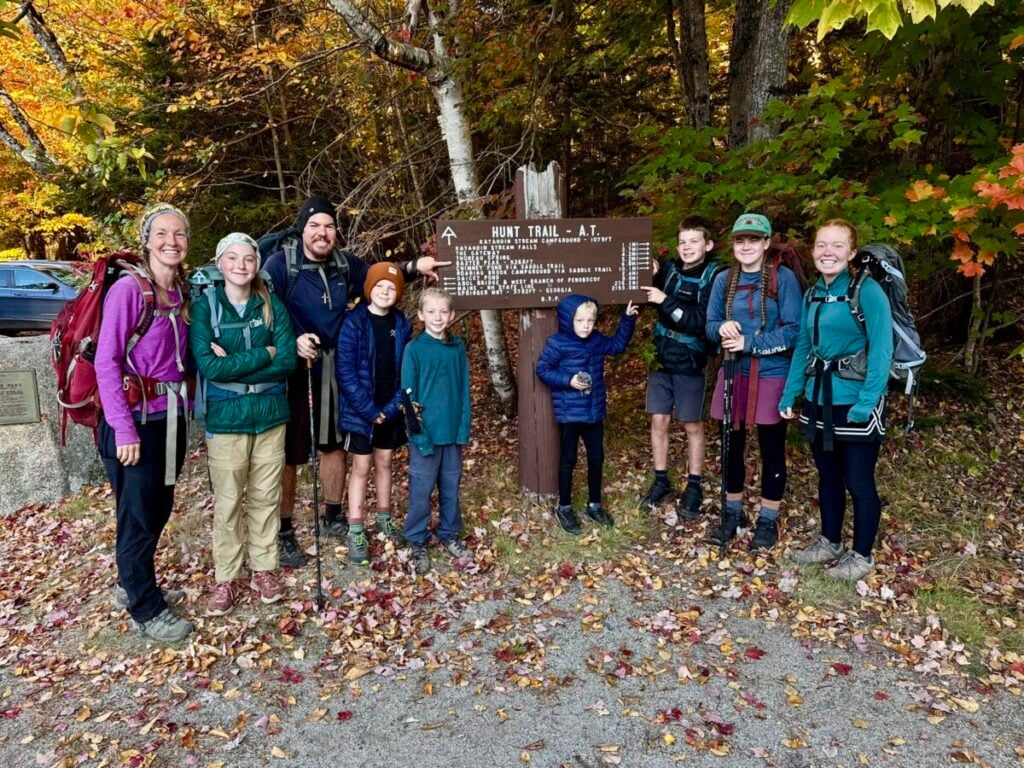
There are so many aspects of preparing for a long-distance thru hike with your family! Backpacks, sleep setups, food systems, and certainly not least, the clothing you will wear and bring. When my family, two adults and seven children, undertook to hike the Appalachian Trail, the right apparel was definitely on our minds.
Choosing clothes for a family thru hike is different than planning for a typical trip, even a camping or other adventurous trip. Since anything you aren’t wearing must be carried, you don’t have a lot of margin for extras. A thru hiking wardrobe consists of only the most essential of essentials.
This post may contain affiliate links. As an Amazon Associate and member of other affiliate programs, if you purchase something through one of these links and use the discount codes provided, we may earn an affiliate commission at no cost to you.
All products and brands recommended are hand selected by our team, so thank you for supporting us by clicking through!
Why Does Clothing Matter?
For any outdoor adventure, clothing matters for safety reasons. Naturally, it is a guard against the elements, and the wrong clothing will not only not protect you well, but can actually make your circumstances worse–for example, on a minor level, wet socks can give you blisters.
When you are on a thru hike, every decision of what to bring is compounded, since you can’t easily access a replacement or carry multiples. This is true of clothing as well, so it must hold up to the challenges of a thru hike, while being minimal in weight and quantity.
Clothing Must Be Versatile
Since you are limiting the number of clothing items far more than you would for any other extended trip, it is especially important that what you do bring is versatile. What you wear in the chilly early spring weather must also be adequate on hot summer days. What is pleasant in sun needs to also be sufficient in rain.
Clothing Must Be Sturdy and Light
It’s not as easy as you might think, to find clothing that is sturdy, light, and bonus, not crazy expensive. Many clothing items can’t hold up to six months of the daily wear of a thru hike, which doesn’t necessarily mean they are low quality. It is just a lot to ask of clothing!
Clothing Must Be Comfortable
Maybe it goes without saying, but if you are going to wear the same outfit every day for six months, it should be comfortable. Being on a family thru hike means you will certainly be uncomfortable, but ideally it won’t be because of your clothing.
What Are the Essentials?
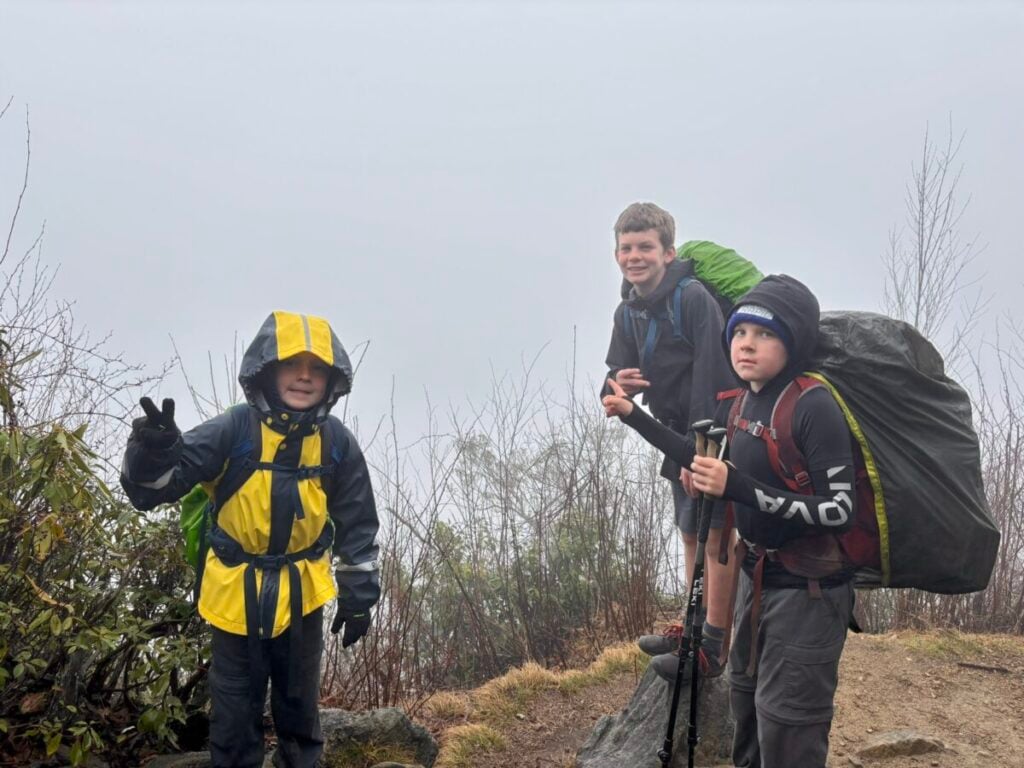
Essentials can be quite subjective. We had a 13 year old girl on our hike, who had a very different idea of essential than did our 11 year old son. As for myself, I brought four pairs of socks, and many backpackers would consider that way beyond essential. Below is a list of what I would consider to be truly essential when it comes to clothing.
One slight caveat: we hiked from March to September in North America, a three-season hike. This clothing list would be different for a thru hike that includes winter conditions. On our thru hike, we encountered a few days of snow, and a few days below freezing, but that was not the norm for the majority of our adventure.
- Underwear – 1 for every 2-3 days, or personal preference
- Socks – 1 to wear, more if preferred, 1 always dry for sleep only
- Pants and/or Shorts – 1 of each max, don’t need both
- Short Sleeve Shirt – 1
- Long Sleeve Shirt/Mid-Layer – 1
- Rain Jacket – 1
- Puffy Coat – 1
- Sleepwear/Base Layers – 1
- Hat/Gloves/Buff – 1 of each
- Shoes – 1 for hiking, 1 for camp
Essential For Every Hike
Our family thru hike was six months long, 195 days. In general, however, the length of the hike doesn’t change the list. If you are only hiking for a weekend, you likely need this exact same clothing list. More days doesn’t equate to more clothing.
It also only changes slightly in different weather conditions (again noting the caveat of this being for three seasons). Even in the summer, if you are hiking in mountains, you should be prepared for significantly cooler weather at higher elevations. You might start the day at 80 degrees Fahrenheit, and want a puffy coat or a rain jacket at peak, where it could be in the 30s and misty.
Choosing Our Clothing
Hiking specific clothing can be expensive. Add the label “ultralight” to anything including clothing, and the price goes up. We could not reasonably afford to outfit every person in our nine-member family with brand new latest-and-greatest apparel.
Shop Your Closet First
Sportswear is usually pretty good for hiking, and many of my kids already owned basketball or soccer shorts and quick dry polyester blend shirts. You may already own items that are suitable for a thru hike. Once we sorted out what we actually needed to purchase, it wasn’t an overwhelming list.
If It Works For You, It Works
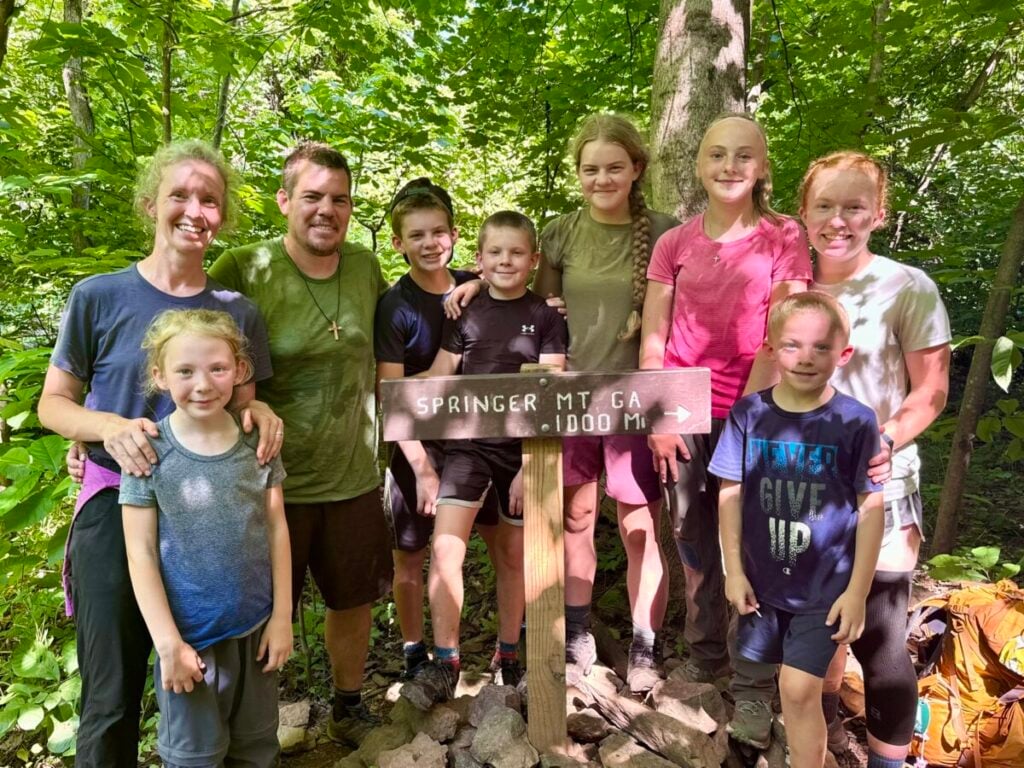
There are SO MANY opinions when it comes to how to do anything related to a thru hike, including what to wear. There are some points of wisdom, like cotton is generally worse than other fabrics like wool or polyester blends, but truly every opinion exists, and strongly.
If you or members of your family have a go-to clothing item for hiking or backpacking that works, go with it! For example, if you ask about shoes in a thru hiking Facebook group, many people will say that if you start a thru hike in boots, you will hate them and switch to trail runners. My daughter and I hiked in boots the whole way and never once regretted it.
Everyone is different, and don’t get pushed away from something you wear comfortably for hiking by the opinion of someone who will never be you.
Items Will Be Ruined
This is not hard and fast, especially for outerwear, but count on whatever you wear being at the end of its useful life at the end of the trail, if not before. So if you have an item of apparel that don’t want to ruin, don’t take it your family thru hike.
If you have items on your purchase list that seem unaffordable, you can opt for a cheaper version and potentially buy a second if it doesn’t last as long as needed. We opted for that route with some items, and were pleasantly surprised that some of them went the distance. Ones that didn’t, we could purchase replacements for along the way, with a few days or a week advance planning.
Our Favorites, From Inside Out
I won’t list every single item of clothing we brought on our thru hike since that would be close to 100 items between the nine of us! I picked our key favorites in each category from the essentials list above.
Underwear
Good underwear is a great start to your apparel list! Chafing can be a significant problems for hikers in the wet and muggy conditions of the Appalachian Trail and can even bring an end to your thru hike attempt. However, it is typically an issue only for adults or adult-sized teens. Our younger kids wore their regular undergarments.
Branwyn Innerwear
Branwyn makes merino wool bras and underwear that are ideal for thru hikers. Lightweight, comfortable, quick dry, designed to reduce odor, and washable in the backcountry. I wore a set on the trail, and they were ideal throughout. I still wear them post-hike as well, although after more than a year of use, the underwear are close to developing holes.
Period Underwear
If you have girls or are a woman yourself and plan to be hiking for an extended period (oh my, bad pun), feminine care will be a factor. Having period underwear along was really handy for my teens girls as we spent six months on a trail!
Smartwool Boxers
My husband wore these on the trail, and swears by them. It was not unusual for him to have chafing problems even on weekend hikes in muggy weather before he started wearing these, and has had zero such issues since. They are kind of pricey and do wear out after a few hundred miles (according to our experience and their website reviews), but he feels like they are well worth it.
Socks
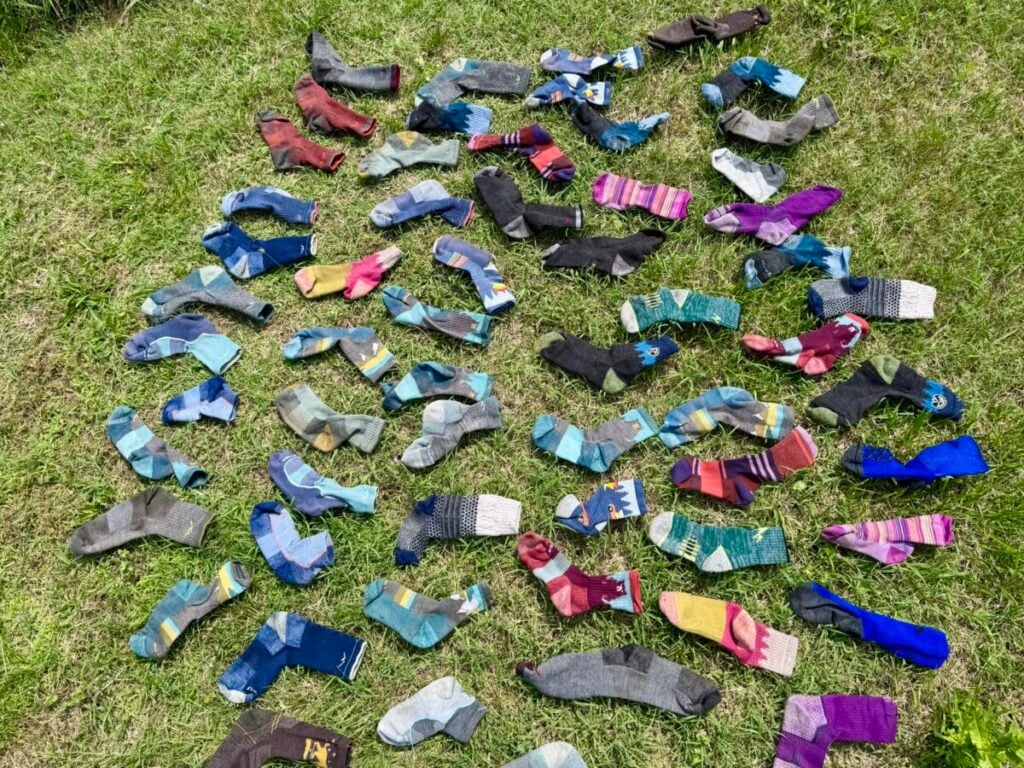
Quality socks are essential for a long distance hike. This is not something you want to skimp on–your feet are literally carrying everything! Baby them as much as you possibly can, preferably with wool socks not cotton.
Darn Tough Vermont
These are the gold standard of merino wool hiking socks, with good reason. They are long-lasting, comfortable, and the company has an awesome lifetime warranty that I can confirm is legit. They make youth and adult sizes in lots of different patterns so you can easily match them up after a trip to a laundromat during your trek!
Tough Cutie
My teenage daughter wore these on our hike, and the name was so fitting! They are a woman-owned company and were great quality.
Antsang Merino for Kids
We were a few pairs short of the above brands for our youngest kids, and didn’t realize it until the last minute, so we found this cheap brand on Amazon. They only lasted a month or two before developing holes, but they were easy to reorder. My seven year old son absolutely loved them, and his reaction to a new set was pretty sweet.
Pants
Pants are semi-optional, as some hikers, including several in my family, prefer to only hike in shorts. I personal only wore pants on the trail, and some of my family wore both depending on the weather. If you have a family member who hates hiking in pants, it’s fine to skip them, even in fairly chilly conditions.
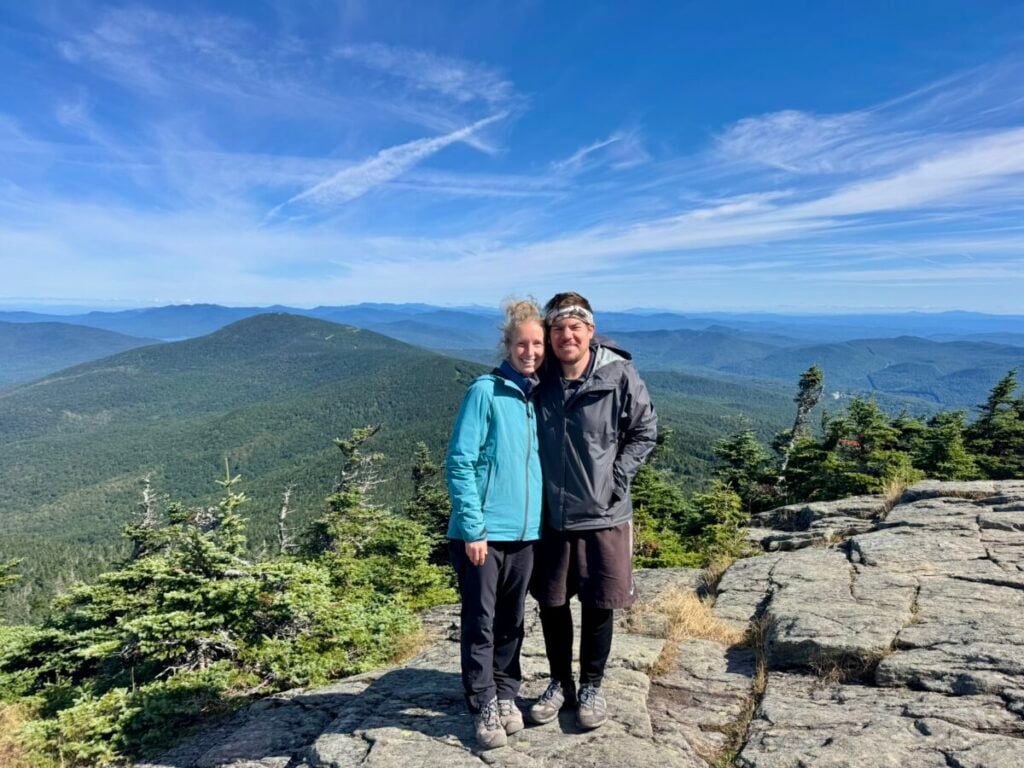
Title Nine Recycled Clamber 2.0
I wore these pants literally every single day on the trail and loved them so much! Title Nine actually gave them to me, and I was initially hesitant because I already owned hiking pants I loved and wasn’t sure I wanted to commit to a change for the longest hike of my life. But I’m so glad I did!
They are looser in the hips than other pants I have worn, which was so nice for all day adventure wear, and they were super quick to dry; I was usually the first with dry pants after a soaking rain. But my favorite part was the velcro-closure upper thigh side pocket–it was the perfect size and location for my phone, so I could easily stow and retrieve my camera anytime!
I was a little thinner when I got back from the trail, so I switched back to my old hiking pants which were a slightly smaller size. And all I wanted was that thigh pocket back! Thankfully, I regained the weight I lost, so I now have no problem continuing in the Clamber pants. 🙂
REI Sahara Convertible Pants
My husband and a couple of our kids wore these on the trail, and they are an old reliable option. It’s a great shortcut to carrying both shorts and pants. Just make sure the kids pack up both zipped-off leg sections when you leave a shelter or a hostel!
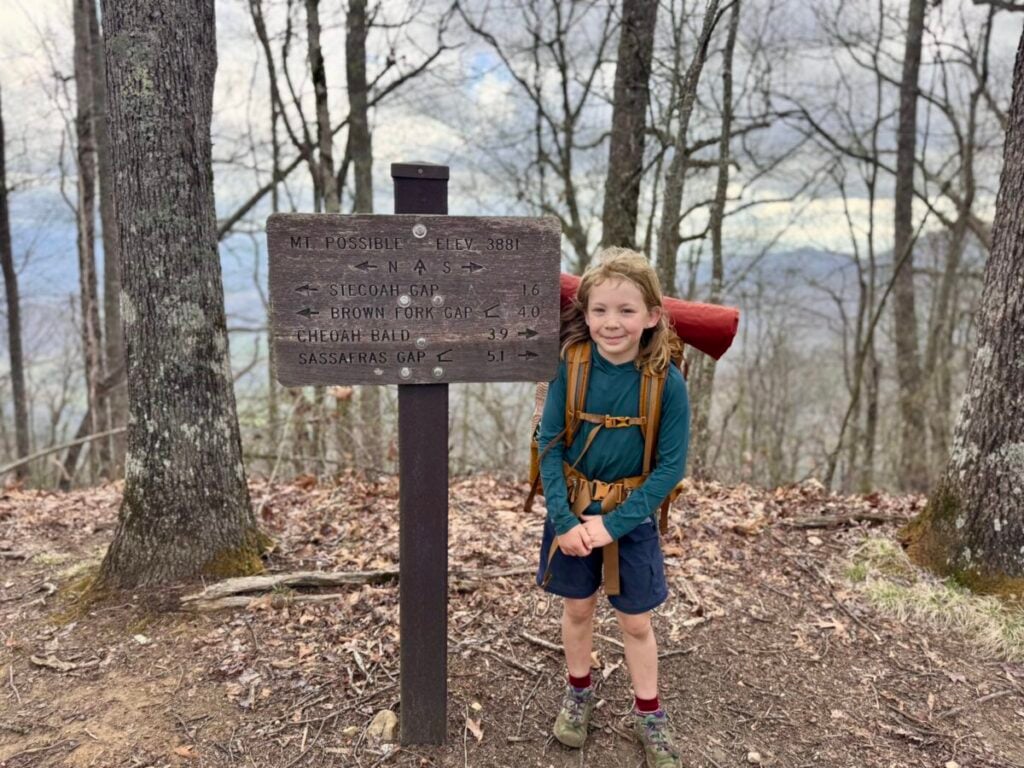
32 Heat Base Layers Under Shorts
Some of my kids just could not be convinced to wear pants, no matter the temperature or conditions. They would occasionally wear leggings under shorts as a warmer alternative to bare legs. The 32 Heat base layers are cheap and light, and it is pretty easy to carry an extra pair that doesn’t need to stay dry or clean for sleeping.
They don’t last long under tough conditions, but they are only about $16 a pair to replace, and my teenage daughter who doesn’t wrestle her siblings when she’s not hiking (unlike her brothers) was able to make her set, last for the entire hike. Also, they don’t need to look good, so a hole or two is not a big deal on the trail. You can even snag these at Costco for $10 or less seasonally.
Shorts
Three of my kids exclusively wore shorts throughout their hikes, and since most of the months of a typical Appalachian Trail hike take place in warm weather, they’re a pretty good bet for most thru hikers. I am too wary of poison ivy to bypass pants, but miraculously, even our shorts-wearers managed to avoid it.
Shorts were a clothing item we definitely shopped our closets for first. They seemed like something that didn’t need to be particularly specialized and we could save money on. My husband even just cut the mesh out of his swimsuit and wore it to hike.
Mesh Sports Shorts
Our kids play basketball, and most of them already owned lightweight synthetic shorts for sports practice. They are actually pretty great for hiking too! We just had them pick pairs that they would be okay with ruining, and that seemed appropriately quick dry.
Willit Women’s Athletic Shorts
For the few of us who didn’t already own suitable shorts, I found these on Amazon, and was very happy. I wore mine as pajamas when it got warm, and two of my teen daughters hiked in theirs. The pockets zip closed, which I really like for outdoor adventures.
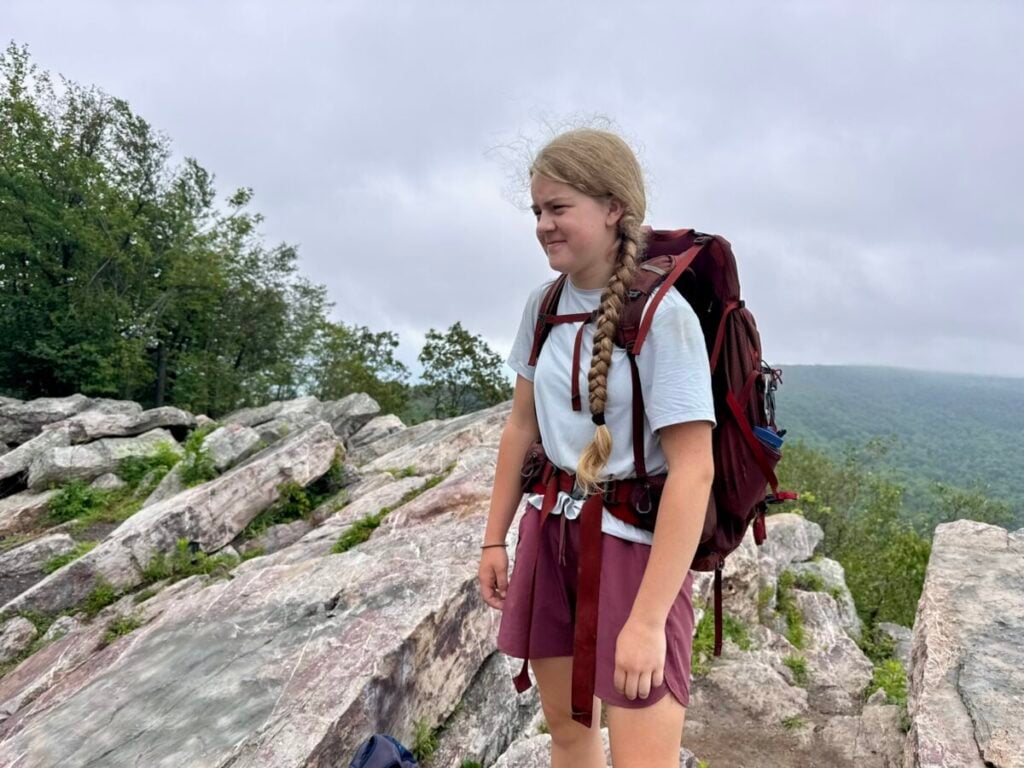
Short-Sleeved Shirts
I was most nervous about the cold weather we would experience on the trail, but the reality is that most thru hikers spend way more time in warm and hot weather. Temps were well over 80 degrees Fahrenheit for close to half of our hike, and humid to boot. A quality hiking shirt that can wick sweat and rain away is pretty critical!
All In Motion
This is Target’s athletic brand, and it’s been a really reliable option for us for hiking shirts throughout training for the Appalachian Trail and on the trail itself. They are not expensive and last well, although the light colors do hold stains and they are not odor reducing. Not issues we were particularly concerned about during six months in the woods, but something to know!
Unbound Merino
I opted to try a merino wool shirt for my hike, and liked it a lot. It was expensive and not as soft as my All In Motion synthetic shirt that I left behind, but still very comfortable. It is also naturally odor reducing, so I smelled just slightly better than the others.
It lasted the entire hike, just barely, with wear holes rubbing through below my pack straps by the end. I machine washed and dried it throughout the hike, which is definitely not following the laundry instructions and may have shortened its life, but my husband had to replace his Smartwool shirt after a couple of months, so I was happy with my results.
Vuori Strato Tech
Vuori advertises this material as unbelievably soft, and it truly is. My husband first ordered this as a mid-hike replacement for his sleep shirt, but switched to hiking in it for the last month, and it’s now his favorite shirt. Since he didn’t use it exclusively for the six months, I can’t say for sure if it would last the entire way, but he still wears it frequently at home, so it feels like a worthy investment.
Long Sleeves/Mid-Layers
A comfortable long-sleeve shirt is important even in warm summer weather! Higher elevations mean cooler temps, and on days when you happily hike in shorts and a tee shirt, you may still face cold mornings and evenings for setup and packup. I wore my mid-layer almost every day for some length of time.
We did some closet shopping for this category. My husband and a couple of the kids wore shirts they already owned, including my oldest son wearing a thick long-sleeved cotton shirt that he insisted was fine. I guess it was, since he used it the entire trail, but I wouldn’t recommend that material since it gets so heavy and cold when wet!
Below are some favorites that I would absolutely recommend and use again if we ever are lucky enough to hike another long trail!
Title Nine Grace Tee
Another pre-hike gift from Title Nine that I ended up loving! One of my teenage daughters had one as well. The material was soft, it held up so well, and washed to look fresh every time; so much so that I still have it in regular rotation and you would never know it went through six months on the trail! I also love the color options, way prettier than a lot of neutral or basic hiking clothes.
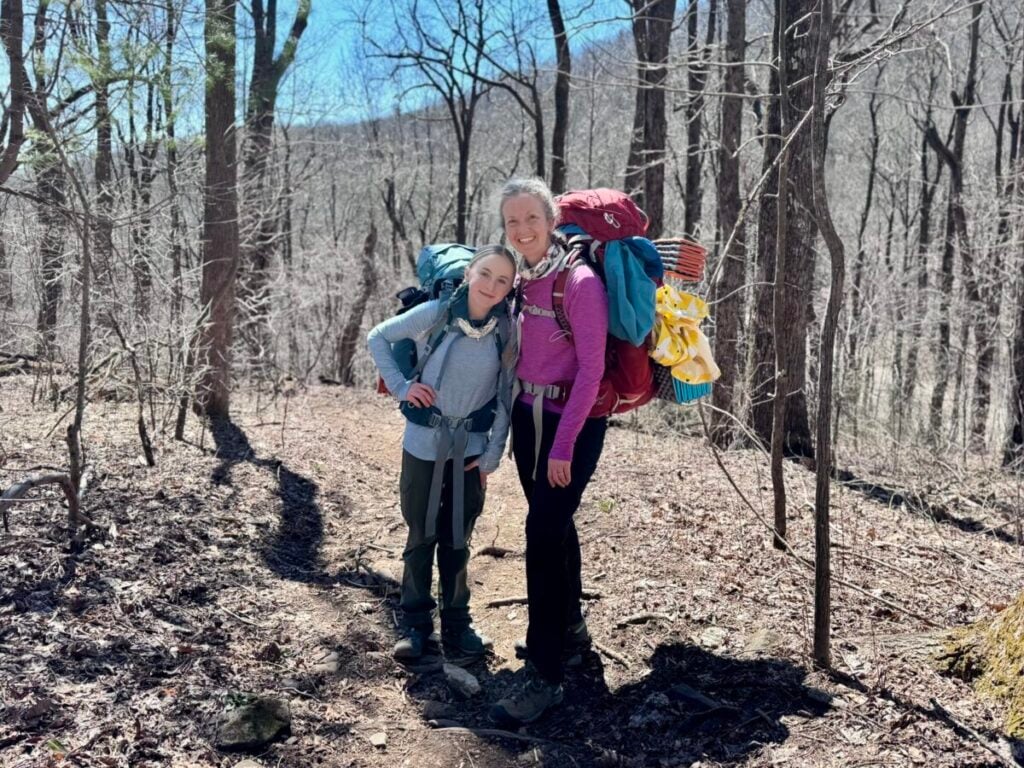
Akova Kids’ LS2 Hoodie
My 11 year old son wore this one, and it was perfect! Super soft and super light plus quick dry properties were all ideal for a thru hike. The hood and SPF50 were helpful at the beginning of the Appalachian Trail before the tree cover filled in, and this one would also be great on other long trails that are more exposed to the sun.
My 9 year old daughter wore the LS1 Hoodie, which is very similar but with smaller graphics. She wore it in Mariana Trench, which is such a nice color! A couple of my kids also wore the short-sleeved version of this shirt on our thru hike.
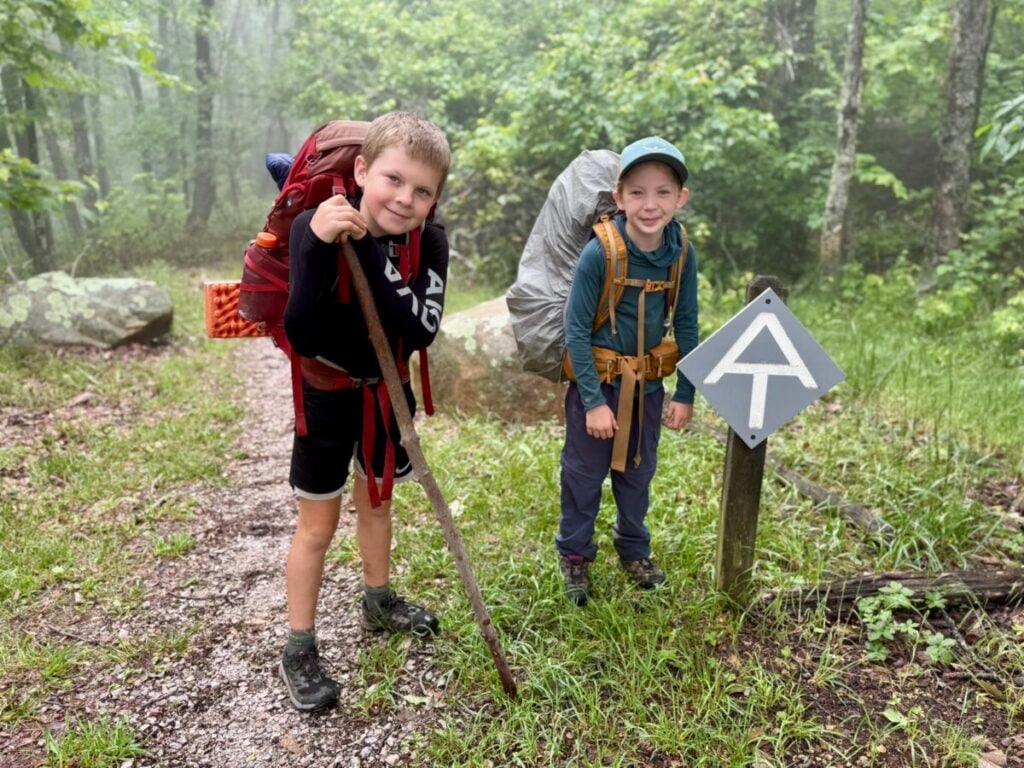
Akova Women’s LS 1/4 Zip
This was perfect for my oldest daughter. It comes in black as well, but she opted for the Blue Crush, very similar to the Mariana Trench. It doesn’t have a hood, which suited her preferences really well, but could be a downside for some who are looking for more sun coverage.
Rain Jackets
Rain jackets for a thru hike are kind of tricky. A lightweight one will not keep you dry in particularly lengthy or heavy rains. On the other hand, jackets that can truly keep out the water are generally heavier. Also, many hikers, including many in our family, will skip the rain jacket if the rain is either super light or super heavy (the latter because heavy rain for hours will soak through nearly all rain jackets, and they preferred to keep it dry for camp set up when they were no longer moving).
We ended up going with heavier rain jackets for the younger kids, because I was concerned about their ability to moderate their body temps in wet weather, and they weren’t carrying much other than their own clothing. I’m glad we went that route, if only because it eased my mind a little on their behalf.
However, because they were heavier, they didn’t dry as quickly in the summer wetness, and ended up with mildew spots on the inside by the end of the trail. We threw a couple of them away once we got home, which I was bummed about because they were really good against the elements. So choose your own adventure, there is no perfect solution!
Reima Lampi
These are truly waterproof jackets that I would absolutely buy again (we do have one new one), despite the mildew problems we ran into, under obviously unusual circumstances. The younger kids were the only ones who actually were dry even on soaking wet days, and I was so thankful for that during our chilly and wet early days on the trail. I was nervous about hypothermia for them on the trail, and we had no problems with that.
They really only got mildew spots when we hit two straight months of extreme heat and humidity, but under even the slightest climate moderation, I doubt it would be an issue. They also have such bright reflective strips that were really helpful on the trail in dusky or foggy conditions, and are also excellent for our regular life back in the city. The price for the rain jackets is also reasonable enough that it wasn’t too financially painful to let them go after six months of hiking.
REI Rainier
This jacket comes in a kid version and an adult version, and we used both during our hike: one adult size for my teenage daughter, and a youth size for my teenage son. They were great! They held up well along the way and were less expensive than some top tier brands.
Patagonia Torrentshell
This is another rain jacket that comes in kid and adult sizes. My husband wore the adult version on our thru hike, and it’s still in great shape. It is more expensive than the REI jacket, but does seem like it holds onto its waterproofing longer. Because of the higher quality, it is a little heavier, but not by much.
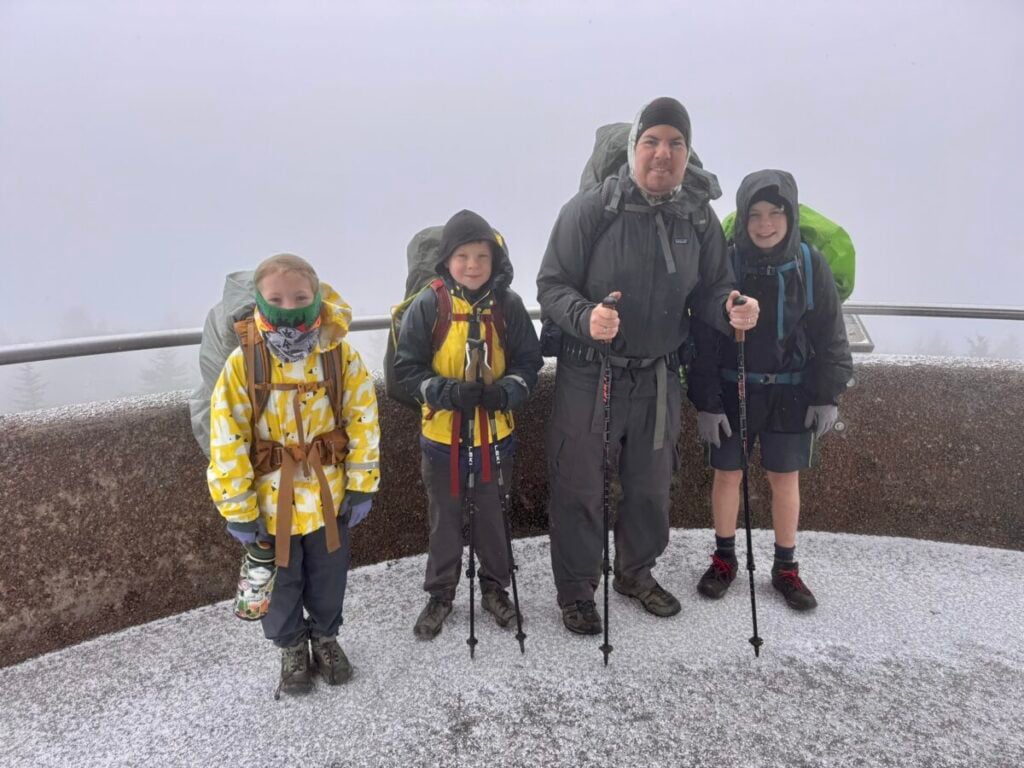
The only other thing I would say about rain jackets, and this goes for every brand we have used over the years of training and preparing for the Appalachian Trail, is that the waterproofing on lightweight rain jackets is not permanent. If you have worn the same rain jacket for many days of hiking in the rain, it may not be waterproof anymore. Before taking it on a lengthy backing adventure like a thru hike, consider purchasing a new one or washing it in a waterproofing wash like Nikwax.
Puffy Coats
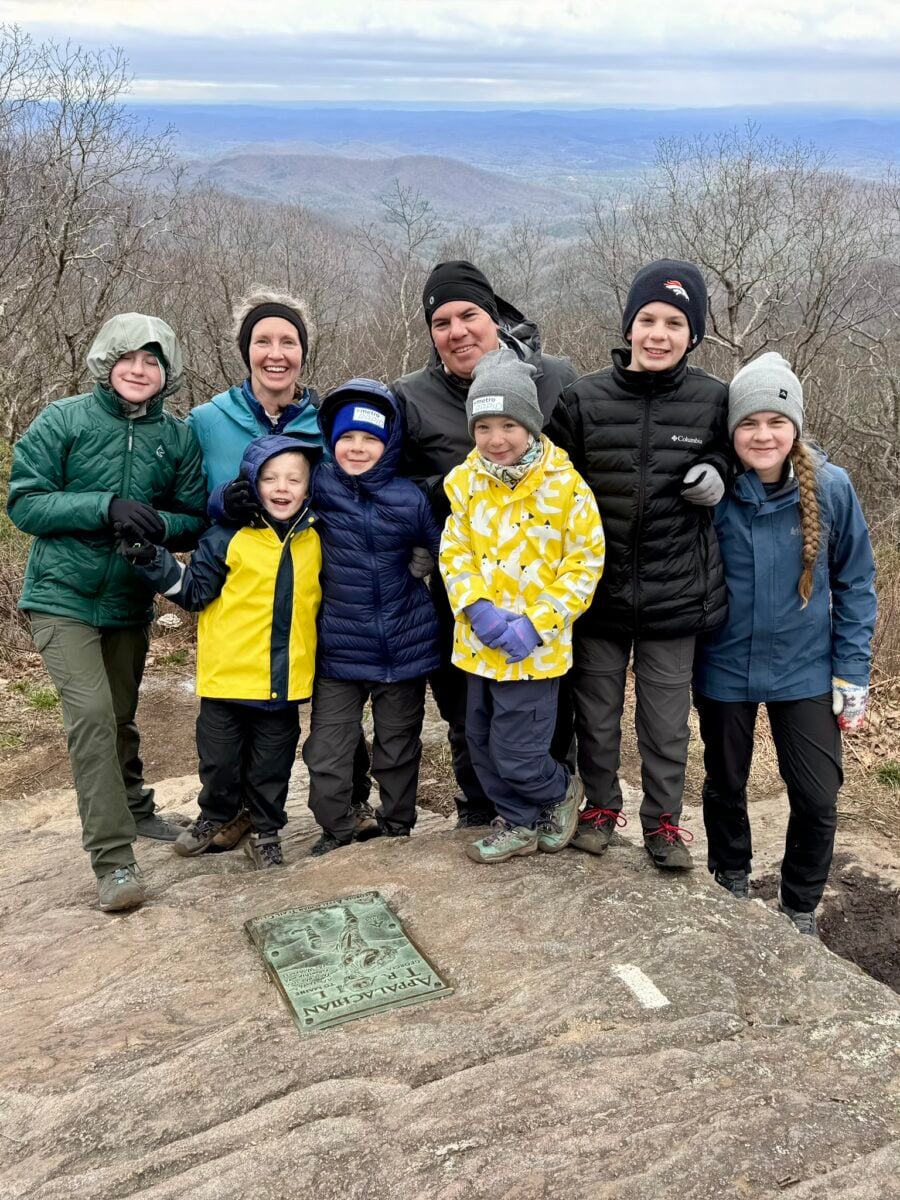
We spent about a month at each end of our March-September thru hike in chilly weather. However, at high elevations, the weather is almost always colder and often more erratic. Mount Washington on the Appalachian Trail in New Hampshire has snowstorms at its peak even in July!
Some hikers send their puffy coats home for a couple of months during the summer, but many, including seven of our nine family members, kept their puffy coats with them the entire hike. I wore my puffy coat off and on even throughout the summer months, mainly during camp setup and teardown when I was not moving much.
Lands’ End Packable Hooded Down Puffer
I found this kids’ puffy coat on Amazon and it was absolutely perfect for our thru hike needs! It is super light, packs down really well, and was a very reasonable price. Also, if your child leans to close to an open flame and melts a little hole in it, it’s an easy patch with duct tape or tent repair tape. Lol.
Akova Insulated Jacket
This was actually shopping our closet, but it worked out really well for my second teen daughter. It isn’t ultra packable, but tamps down well enough, and was light and warm. Plus she actually looked cute in it rather than puffed, if that matters to your teens. Truly, everything we used that was from Akova worked out really well.
Patagonia Women’s Down Sweater
I am a confessed cold baby. This coat was perfect for me–really warm, lightweight, and held up really well. I wore it for years before our hike, wore it multiple days a week on our hike, and still wear it after the hike, albeit a slightly dirtier version now. It is expensive, so I’m thankful it also lasts!
Sleepwear/Base Layers
We mostly did not wear base layers to hike in, mainly because the weather conditions on a three-season thru hike rarely warrant it. There were a few days, early and late in our hike, when we would want a long-sleeved base layer, but we mainly wore ours to sleep in, or some wore base layer pants under shorts in cold weather.
Utilizing base layers as sleepwear is a great way to save a little weight, but it is important that you make sure whatever you plan to sleep in will be dry when nighttime arrives. So if you expect to need to hike in base layers regularly because of cold conditions, carrying an additional set of sleep clothing may be an essential safety issue. Cold + wet is the fast track to hypothermia!
On the Appalachian Trail, it is often wet, and it certainly can get cold and wet. But for most people, it’s not cold enough to want base layers under pants since your legs warm as you hike the entire day. Several of us carried base layers and pajamas early on, then sent home the extras, especially the base layer pants.
32 Heat
These are super inexpensive, super light, and very easy to get holes in. For us, the two former qualities outweighed the last, and most of the kids wore these as their base layers. Since we were just hiking and sleeping, knee holes weren’t a big deal, and the warmth layer was sufficient for nearly all days of our hike.
They are not overly warm, so if you are planning a family thru hike where you will regularly be below freezing, this may not be the base layer brand for you. We only had a handful of days where these were not enough even inside a quality down sleeping bag, and on those nights, we just wore all of our clothes.
Smartwool
My husband already owned a pair of Smartwool leggings, and I owned a Smartwool base layer top, so we brought those. Honestly, most days they were too warm for the weather. I really only wore mine for the first couple of weeks. My husband wore his a little more often, as a hiking layer under his shorts. Both items were soft and comfortable.
Cotton
You may have heard the saying, “cotton kills.” The reasoning is that in wet weather (or if you are sweaty), cotton holds moisture close to your skin and keep you feeling wet. This can be harmful to your temperature regulation in cold or hot weather and is not something to ignore.
That said, it is hard to beat the softness of a cotton t-shirt, and dry, they aren’t heavy. Several of us carried a cotton t-shirt for use as sleepwear only– also doubled as a “town shirt”–and I LOVED putting on a worn familiar cotton t-shirt for sleep. If you keep it dry, cotton is amazing.
Hats/Gloves/Buffs
These items are important but easy to skip over during preparations as you focus on larger pieces of apparel. We were definitely scrambling in our last couple of days, trying to make sure everyone had a warm hat, in late March when regular stores have kind of moved on from winter accessories.
Buff Neckware
Buff makes really cool national park and long trail neck gaiters. They were perfect items to recommend to extended family members who wanted to get going away presents for us. They are excellent as neck warmers in chilly weather, neck coolers when soaked in water on hot days, and as headwraps to cover up that greasy trail hair.
HEAD gloves
My husband and I have both owned wool gloves over the years, and in our experience, the fingers wear out too quickly to be worth the expense. So we got everyone these fairly cheap gloves from Costco, and they worked great. We really only used gloves at the beginning of the trail (a little bit toward the end as well), but they were sure nice on those cold mornings at the start, when we weren’t sure why in the world we were out there.
Beanies and Caps
Assuming your family is like ours and owns way too many random winter hats, just rummage through there and make sure everyone has one that fits. 🙂 Seriously, whatever you have at home that is reasonably lightweight is probably fine. My husband didn’t have one, so we bought a Smartwool beanie for him.
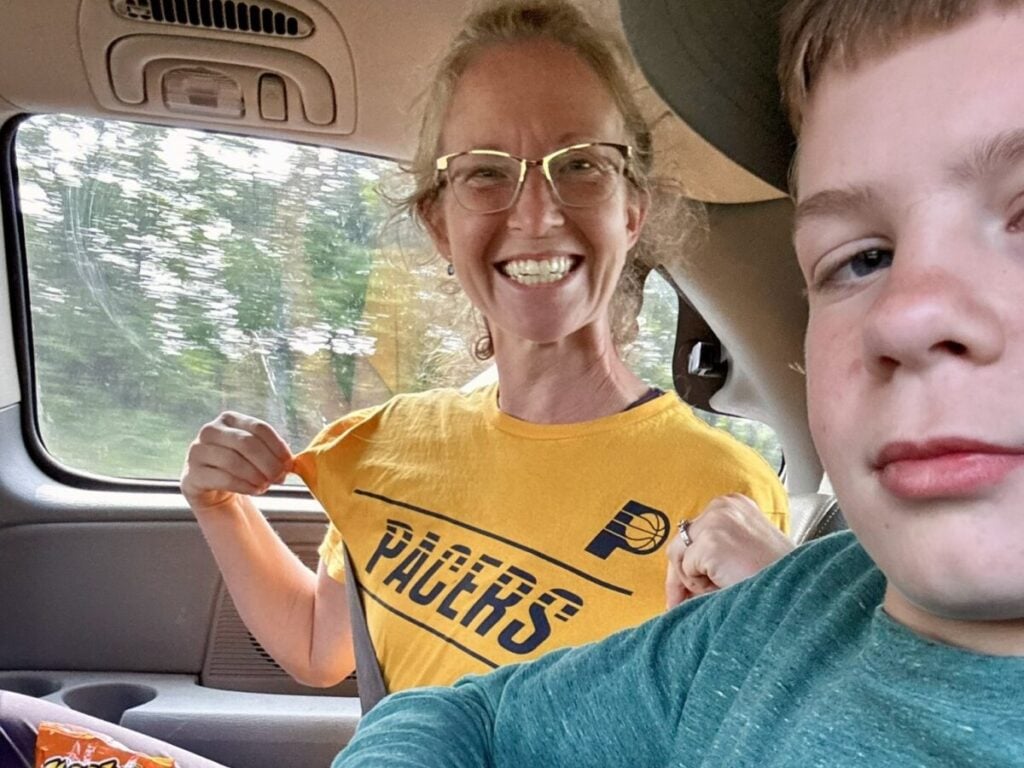
My youngest son wore a Indianapolis Colts beanie with a yarn ball on top, and got his trail name from that hat. “Lucas Oil” (the name of the Colts stadium) got that moniker just a couple of days in.
Some of the kids were given Osprey trucker hats partway through the hike by people who were handing them out to thru hikers. They really liked having them, and many people like to hike in caps to keep bugs from falling on their heads. You can also use them as a manually powered fan, of course!
Shoes
Shoes are so personal to each hiker, based on style preferences, foot shape, and more. The best way to properly outfit everyone with footwear for a family thru hike is to go in-person to an outfitter and try on a few types. Most thru hikers these days wear trail runners, but my daughter and I hiked in boots the entire way, so it really is up to you and what you like.
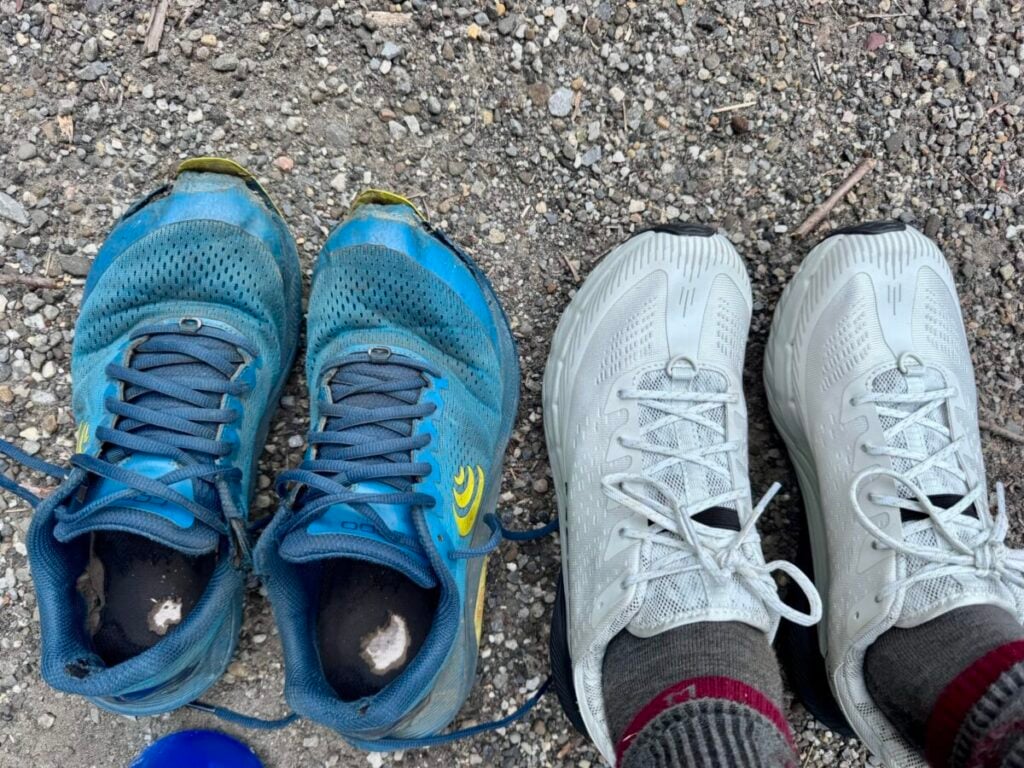
On the trail, my family wore shoes from Merrell, Topo, Keen, and Oboz, and wore various styles within those brands. They all lasted a similar number of miles on average. I don’t think there is one style or brand that should be the go-to for everyone; it just needs to be a hiking shoe that fits you well.
Crocs for Camp
When did Crocs go from dorky to cool? Sometime in the last twenty years, this miracle occurred. They are also the ideal camp shoe–light, quick-dry, sturdy, and convert to “sport mode” for creek crossings. Have everyone pick their favorite color and clip them to the outside of your packs.
The sections below are more about how to purchase new shoes once yours wear out (typically after 500-700 miles), rather than advising on specific models. Take care of those feet by not waiting too long to get a new pair!
Adults Can Buy At Outfitters on Trail
Many towns along the Appalachian Trail have outfitters, and that may be the case for other long trails as well. If you are flexible about the style and brand of hiking shoe that you wear as an adult, you will likely be able to walk into any outfitter and come out with a pair of shoes. However, they typically have limited kids’ sizes, if any at all.
Order Ahead for Kids or Special Sizes
For our kids, we always had to order online. This isn’t very hard, but you do have to plan ahead. If you are stopping at a hiker hostel, or there is a hostel that permits mail drops (usually for a small fee), you can set the shipping address to the hostel and pick them up there. You can also ship to General Delivery in an upcoming town, and use the address of the local Post Office.
Two key caveats for shipping ahead. Most trail towns are small and at least semi remote, and shipping takes longer than in a larger population center. Two-day shipping from Amazon Prime converts to about five days once you are in the northern states, so be sure to submit the actual address before counting on the shipping dates.
The second caveat is that small town post offices are not open every day, and none are open on Sundays or federal holidays. We definitely talked to hikers who were stuck in a town for an extra day or more, waiting on an unexpected post office closure, and I made a few frantic calls to Amazon customer service, trying to reroute shipments whose timing no longer worked. Thankfully you only have to buy shoes a few times on trail!
We had good success ordering various Keen and Merrell shoes from Amazon. If you have a very specialized brand or size that you need to order directly from the company, I recommend you call their customer service line to discuss shipping dates so you know how far ahead to ship your order.
Keep It Simple
The great thing about thru hiking is how simple it is. Not easy or comfortable by any means, but definitely simpler than typical modern living. All we had to do each day was walk from A to B!
Keeping it as simple as possible with our clothes was definitely a piece of that. We tried to balance weight and cost, and limit what clothing we were carrying rather than wearing each day as much as possible. As part of building care for the environment into our hike and our kids’ lives, we also tried to model using what we already have instead of automatically purchasing new items.
We had to make a handful of purchases just before our family thru hike, and replace a couple of items along the way, but overall, we lived with essentially just two outfits per person for six months! I feel like there is a good life lesson in there about what we think we need versus what we actually need.
Hiking the Appalachian Trail as a family was an amazing experience, and one that I wish we could repeat. If you have the opportunity to do so with your family, I would encourage you to give it a shot!
Related Articles
- Backpacking in Hot Days and Cool Nights
- Journey To the Appalachian Trail With Kids
- Adventures With Older Kids
- Feminine Care On Outdoor Adventures
Clothes For a Family Thru Hike
© 2026, Tales of a Mountain Mama. All rights reserved. Republication, in part or entirety, requires a link back to this original post and permission from the author.